AI is transforming how creative works are produced, distributed, and valued. As nations revisit copyright through the lens of machine learning, Brazil stands out as a living laboratory: regulatory proposals are testing the limits of established legal assumptions, while Brazilian artists redefine those same boundaries through bold, experimental technology use.
To explore these issues, we spoke with Marina Garrote, Research Director at Reglab. Marina is a lawyer and researcher with experience in leading law firms and think tanks in Brazil and the U.S., holding an LL.M. from NYU.
Q. How would you describe the current state of the AI and copyright debate in Brazil?
What makes this particularly challenging is legal uncertainty. The Brazilian Copyright Law of 1998 does not include broad exceptions for Text and Data Mining (TDM) like those seen in many developed countries.
The discussion currently centers on Bill 2338/2023. After passing the Senate in late 2024, it is now in the Chamber of Deputies. Interestingly, it proposes a far more restrictive approach than other countries, effectively requiring individual authorization and remuneration whenever protected works are used to train AI systems.
Q. What is the Copyright and Technology Observatory?
The Observatory is an initiative we created to analyze how AI affects creativity and copyright. Our goal is to build a solid technical foundation to understand the economic, social, and legal impacts on creative industries and intellectual property. We produce empirical studies and economic impact reports, often in partnership with global experts.
Q. Much of the discussion still revolves around whether AI “steals” or “creates.” Why is this framing insufficient?
Because it assumes a clear and direct connection between a specific protected work used in training and the resulting AI output—and that this connection can be measured individually. Copyright usually works like this: you identify how much of a work was reproduced and calculate payment.
When we focus on whether AI “stole” something, we miss the point: attempting to define remuneration based on measuring individual uses in this context is arbitrary and, in practice, nearly impossible.
Q. Reglab published a study on this “practical impossibility.” Can you elaborate?
We interviewed STEM professionals to understand how AI models actually learn. The primary problem is technical, not legal. When an AI is trained, it does not “store” songs or images as files. Instead, it breaks everything into tiny data points, transforming them into a massive collection of numbers representing patterns, not the original works.
It is impossible to trace exactly which book or photo contributed to a specific AI output. The model retains only general knowledge—the “idea” of a dog—rather than a specific copyrighted photo of one.
Q. What would be the consequences if this restrictive regime moves forward?
Some companies might move their data centers abroad to avoid jurisdictional complications. More likely, companies will simply stop using Brazilian content to train AI. This means AI models operating here would become less accurate in Portuguese and less tuned to our specific cultural context.
Q. And this would have a broader economic impact?
Precisely. A macroeconomic study by Ecoa, a partner of the Observatory, estimates that these proposed remuneration rules could reduce Brazil’s GDP by 0.2 percentage points—roughly R$ 21.8 billion over the next ten years.
This loss occurs because the law would restrict “Augmentative Learning” applications—tools that help healthcare professionals, lawyers, and agronomists analyze complex data. Surprisingly, the most affected sectors would not be the creative industries, but rather professional services that rely on AI to process local language and regulatory frameworks.
Q. Looking ahead, what are the next research frontiers?
We need to look at how regulation actually affects society in practice. At Reglab, we are launching a fellowship program to support researchers from different regions of Brazil, bringing in voices that have had less space in this conversation. We are also developing a specific study on the media and entertainment sector to measure its real exposure and potential net benefits in various copyright scenarios.
🎨 5 Artists Expanding AI’s Creative Frontiers in Brazil
-
Marisa Maiô: A fictional character and satirical talk show host generated entirely by AI. Created by Raony Phillips, she became an internet phenomenon in 2025.
-
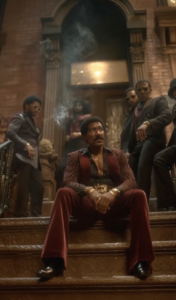
Blow Records: Raul Vinicius uses AI to recreate Brazilian funk carioca hits as soul and motown classics from the 50s-80s.
-
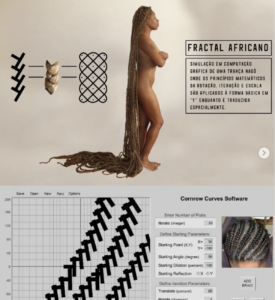
Zaika dos Santos: A data scientist and multi-artist using AI to strengthen Afrofuturist narratives and perspectives from marginalized communities.
-
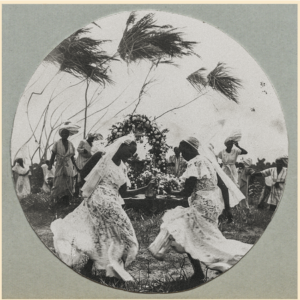
Mayara Ferrão: Creator of Álbum de Desesquecimentos (2024), using AI-generated photos to reimagine colonial archives and depict intimate moments of Black and Indigenous women.
-
Pedro Garcia: His project Carnavais Artificiais uses AI to blend real photography with cinematic references, creating a “fantasy universe” of Rio’s Carnival that never was.