The Creatives of the Future: How Artificial Intelligence is Reshaping the Creative Industry in Brazil
The advance of Generative Artificial Intelligence is changing the way ideas are produced, distributed and consumed. But what does this mean, in practice, for those who make a living from creating?
The “Creatives of the Future” project investigates this transformation from the perspective of those who are already at the frontier of it. Rather than speculating, we went out to listen.
The Interviews
The video series brings in-depth conversations with professionals from audiovisual, design, art and education who have intensively incorporated generative AI into their processes. Each interview explores how the technology enters creative practice — and what changes when it does.
Participants were selected through the extreme case sampling methodology: profiles that challenge dominant narratives and reveal possibilities that have yet to appear in conventional market research.
The Report
The interviews gave rise to an original analytical report that organizes the accounts around thematic axes and deepens what the videos show in practice.
What the report covers:
Adoption trajectories: how each professional came to AI, and what their paths have in common.
AI in the creative process: at which stage it enters, and what changes when it does.
What it enables: projects, languages and autonomies that were previously unviable due to cost, time or infrastructure constraints.
Challenges and tensions: the pace of tool updates, biases, unequal access, reconfigured authorship, a regulatory agenda lagging behind technology.
Future perspectives: what these professionals see ahead, and what they recommend for those just starting out.
Reglab’s analysis: how these findings speak to the broader landscape of Brazil’s creative industry.
CAMARGO, L.; RIBEIRO, N. Os Criativos do Futuro: como a
inteligência artificial está redesenhando a indústria criativa no Brasil, a partir das vozes
de quem faz. São Paulo: Reglab, 2026.
Camargo, L., & Ribeiro, N. (2026). Os criativos do futuro: como a inteligência artificial está redesenhando a indústria criativa no Brasil, a partir das vozes de quem faz. Reglab.
Camargo, Larissa, e Natália Ribeiro. Os Criativos do Futuro: Como a Inteligência Artificial está Redesenhando a Indústria Criativa no Brasil, a partir das Vozes de Quem Faz. São Paulo: Reglab, 2026.
Autores
Larissa Camargo
Natália Ribeiro
Tags
Post Multimedia
Report from the “Creative Futures” interview series
1st Edition – 2025
About Reglab
We are a private research center specializing in the media and technology sector, supporting companies, associations, and policymakers in making strategic decisions based on data and evidence.
Suggested Citation: CAMARGO, L.; RIBEIRO, N. The Creatives of the Future: How AI is Redesigning Brazil’s Creative Industry, through the voices of its practitioners. São Paulo: Reglab, 2026.
Introduction
The report Creative Futures: how artificial intelligence is transforming the creative industry in Brazil (Garrote; Ribeiro; Pimenta, 2025) systematized evidence to map emerging trends and perceptions regarding the adoption of Generative Artificial Intelligence (Gen AI) in the creative industry. Within the observed scope, the data suggest an expansion in the use of these tools across different stages of creative work, albeit at varying paces among subsectors.
The data indicate that, in most creative subsectors, AI has operated in a predominantly augmentative manner, expanding productive capacities, accelerating workflows, and creating new aesthetic and economic possibilities.
At the same time, the effects of Gen AI depend on the context of adoption and conditions such as training, learning time, technological infrastructure, and access. It also raises tensions regarding authorship, professional specialization, and the distribution of benefits within the creative ecosystem.
This report is part of the Creatives of the Future series, a multimedia project based on video interviews, and presents a complementary scope, focusing on the trajectories of professionals who have incorporated AI intensively into their processes. By observing specific paths, it is possible to identify how the technology is appropriated in daily life and which conditions appear to enable this type of adoption.
The videos are available on Reglab's Instagram profile:
This document consists of a systematization of the interviews conducted, gathering selected excerpts from the participants' statements and organizing them around common analytical axes.
Methodology: extreme case sampling
In research conducted by Reglab, data collection and analysis are always conducted with careful attention and methodological rigor. The selection of the interviewed professionals was based on an extreme case sampling strategy — a purposeful sampling technique used in qualitative research to examine situations where a phenomenon appears in an especially intense, revealing, or exemplary manner.
Based on this approach, the research selected professionals who have incorporated AI into their work at an advanced level. These cases allow for a clearer observation of the conditions, competencies, opportunities, and tensions associated with the adoption of this technology. The interviews explored the following themes:
AI uses in artistic, cultural, and pedagogical creation;
Changes in work processes and collaboration with technology;
Technical, ethical, and authorial challenges associated with this new landscape.
Extreme cases function as a lens to identify hypotheses about the future of creation with AI. They help investigate whether elements such as creative background, digital literacy, access to tools, and curation capacity are merely individual attributes of specific professionals or if they can be developed, distributed, and fostered through public policies, educational initiatives, and sectoral strategies.
Since this is a purposeful sample, the results are not generalizable to the entire creative industry. Nevertheless, they offer a snapshot to understand emerging possibilities, practical limits, and conditions for adoption that can guide future research and debates on training, workforce inclusion, and policies for the creative sector.
Results
The Adoption Trajectory: some creative industry professionals arrived early to the world of AI
When asked when they began using Artificial Intelligence and in what context, the interviewees describe varied trajectories, yet with a common thread: adoption is linked to technological curiosity, practical necessity, or prior expertise, often before the topic became mainstream in the Brazilian market.
Mayra Carvalho – Designer; AI creative direction
Mayra has an extensive background in design, starting in print editorial and gradually migrating to digital. She describes herself as highly inquisitive and always attuned to technological innovations. This curiosity has been a constant throughout her career: from blogs and social media to digital marketing, content, and now, AI.
The launch of ChatGPT emerged as a point of tension. She recalls an initial fear of professional replacement, echoing a widespread market sentiment; however, she made a strategic decision to incorporate the tool into her work.
“And then came 2023 and the launch of ChatGPT—it was that huge 'boom,' right? … I stopped and thought: I need to see the glass half full, take advantage of the fact that I started early, and get ahead of the curve. So I put 100% of my energy into it, and I’ve been at it ever since.”
Rafael Alves – History Teacher; creator of the project “Afro-Indigenous AI: Recreating Narratives and Heroes”
Rafael began using AI in 2022 as a means of professional development, to overcome creative blocks, and to expand his classroom teaching resources—specifically in reconstructing historical representations that are poorly documented. As a History teacher, he saw an opportunity to stay current and utilize cutting-edge technology when he heard that "artificial intelligence was set to take 2023 by storm”.
Zaika dos Santos – Data scientist, designer, and multi-artist
In Zaika’s case, AI did not emerge as a disruptive novelty, but rather as a continuation of a technical journey: her early adoption is linked to data literacy and formal training in AI. She began using AI very early on, as she was already studying data science and artificial intelligence.
Unlike others, AI was not a radical shift for her, but something that fit naturally into her existing work. Given her background in programming, data, and automation, Zaika found the new AI tools familiar, treating them as a means of articulating narratives.
Baepi Pinna – Screenwriter and director of advertising and photography
Baepi describes an early adoption process influenced by his close network — particularly his partner, who was already closely monitoring the development of AI tools and introduced him to ChatGPT — as well as a strategic reading of the market. In his view, few audiovisual professionals in Brazil were paying attention to the topic initially, and AI emerged as an opportunity within the context of post-pandemic reorganization. He was already active in the audiovisual and advertising markets before adopting AI, and his entry into this universe occurred precisely during the post-pandemic period, a time of significant staff reductions and questioning regarding production costs.
“I’ve been in the audiovisual market for a long time, always working with advertising, cinema, sets, large crews… And then, especially post-pandemic, we started seeing a massive reduction in staff and budgets. That was the moment when artificial intelligence began to play a stronger role in my professional life. I was lucky to have a partner who was already looking into this, who had been following these tools and kind of pulled me into this universe. In the beginning, practically no one in the post-production market here in Brazil was talking about it (…). For me, AI came in much more as a matter of feasibility. In the advertising market, the deciding factor is budget. Often it’s not even speed or aesthetics; it’s cost. AI began to make projects feasible that previously simply wouldn't get off the ground. I don’t think AI does anything that cinema didn’t already do before. The big difference is that it makes it more accessible. More people can create, test ideas, show projects (…) it’s a total game-changer.”
Paulo Aguiar – Co-founder of CR_IA; content creator and educator
Paulo reports that he has always been in the habit of experimenting with new creative tools throughout his corporate professional career in the "world of creativity", within advertising agencies and marketing. The adoption of AI solidified during a specific moment he describes as a "turning point". This occurred when he began combining different tools, such as ChatGPT, Midjourney, Dall-E, and video software, and realized a new way of creating was emerging. He quickly understood that, with Gen AI tools, "this is the future of how we materialize our ideas".
Pedro Garcia – Visual artist, creative director, and AI educator
Pedro connects adoption to creative autonomy and the possibility of materializing ideas that previously depended on budgets and intermediaries, while also using AI as a tool for experimentation and teaching.
“'Cartiê Bressão' emerged as a project I started developing after moving back to Rio (…). During Carnival, I dressed up as a photographer (…) that gave me immense freedom to experiment with the camera in the middle of the bloco. From there, the project took on a life of its own. I find this parallel between Carnival and artificial intelligence interesting because, just as Carnival allowed me to step outside a limited vision of what I could do, I see AI as a tool that expands the capacity for expression (…) and, ultimately, how we can see ourselves through what we produce. When these AI tools began to emerge, I naturally felt the urge to experiment as an evolution of my street photography work. (…) I began to realize the power of these tools to see the world in different ways, opening up new possibilities for creation, language, and expression.”
Michel Arouca – Producer and communicator; audiovisual
Michel has been established in the audiovisual and pop culture sectors for many years, working as a columnist, host, and producer. He operates in the audiovisual market with his own production company and is involved in audiovisual projects that incorporate AI. Michel makes it clear that his primary motivation for using AI is expansion: doing things that were previously unfeasible.
Regarding his motivation to experiment with AI, Michel reports:
“We feel there are possibilities to scale, to expand (…). We did not want, in any way, to replace humans with AI. We wanted to find possibilities where we could grow as a company, where we could generate new opportunities and enter areas where we don’t currently work. That’s exactly what happened. So, we hired artists to do all the traditional storyboard work, creating from scratch (…) and we are now partnering with some brands and institutions that have this demand. We see this as a way to do something that would have been unfeasible until now without artificial intelligence. So, it is very much a matter of expansion (…). We didn't view our AI venture as something where we could cut costs, either in terms of money or staff. On the contrary, we said: ‘look, we’re only going to do this if it’s possible to expand.’ And that’s what we achieved. We found that path.”
Where does AI fit into the creative process?
When asked how AI enters their daily work and creative processes in practice, the interviewees describe uses ranging from occasional support to transversal integration throughout the entire process: from the ideation phase to production, including prototyping, curation, and the communication of ideas.
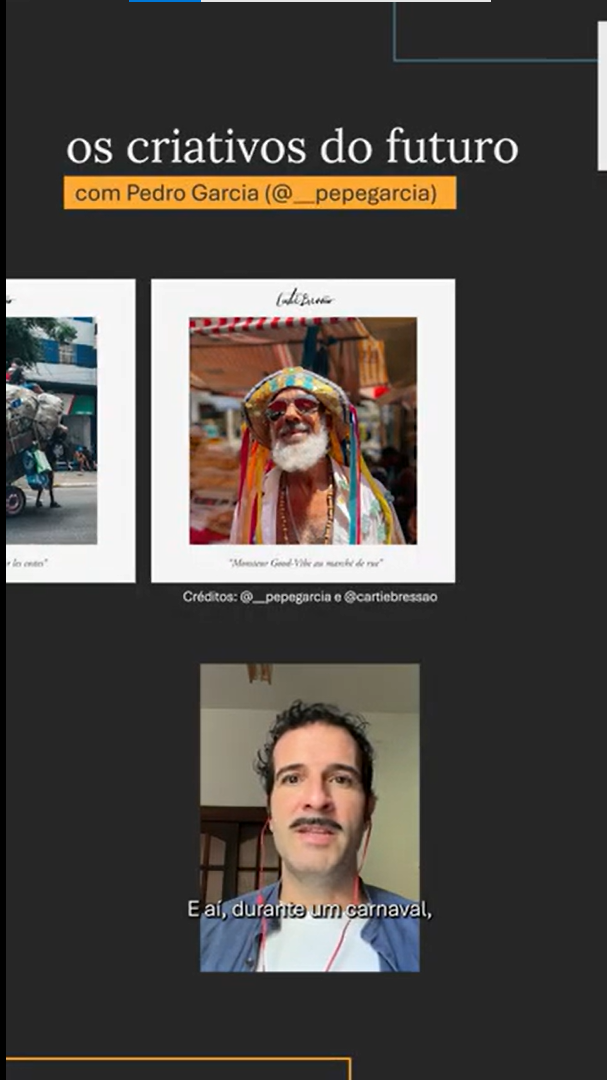
For Pedro Garcia, Artificial Intelligence serves as a platform for creative experimentation, integrated from the very beginning of the process. Drawing from his background in street photography, Pedro explores AI as a continuation of this experimental practice, utilizing the tool to create images and develop original series, such as the Artificial Carnivals (Carnavais Artificiais) project.
AI serves as the medium through which the projects themselves are conceived and developed. Pedro uses the technology to test compositions, characters, atmospheres, and visual narratives, expanding on the logic of chance and observation that were already present in his photography.
For Pedro, the use of AI is linked to the idea of creative autonomy: by transforming the tool into his own experimental environment, he is able to materialize ideas independently, without the need for complex structures, large teams, or high budgets.
“It was something I navigated naturally, guided by this curiosity. And I think there was also an aspect of the process that felt very similar to street photography to me, which is this dialogue with chance. Because with all these generative AI tools, in a way, it’s as if we are creating with a tool that has a soul, or an opinion. I find this very similar to street photography, in the sense that I am there in a dialogue with the street; I have no way of predicting what will happen (…) It’s about that possibility of being open to what appears. And I managed to bring that into these AI tools. It remains very much like that today, even though these tools have evolved significantly, especially regarding control (…) a component of chance still exists. Because, as I said, it’s as if the tool gives you something. I also began to realize that it is precisely through this dialogue and these many decisions being made that I feel my identity — or the identity of whoever is proposing to create something with tools like these — is able to materialize.”
Image 01 – Excerpt from the interview with Pedro Garcia
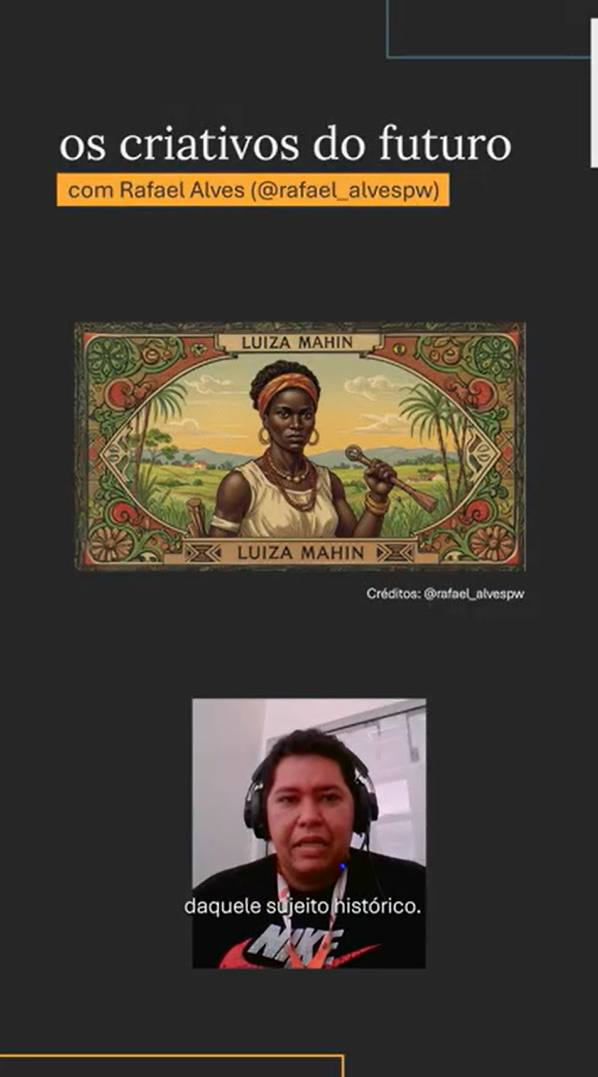
For Rafael Alves, the use of AI occurs primarily within the pedagogical and educational fields, integrated into lesson planning and the development of educational materials. AI is applied to generate images, narratives, and historical representations that are not available in traditional archives, particularly in the teaching of Afro-Brazilian and Indigenous History and Culture.
In this context, the technology serves as a learning support tool, accompanied by critical mediation, transparency regarding its use, and discussions with students about creation processes utilizing generative AI tools.
Image 02 – Excerpt from the interview with Rafael Alves
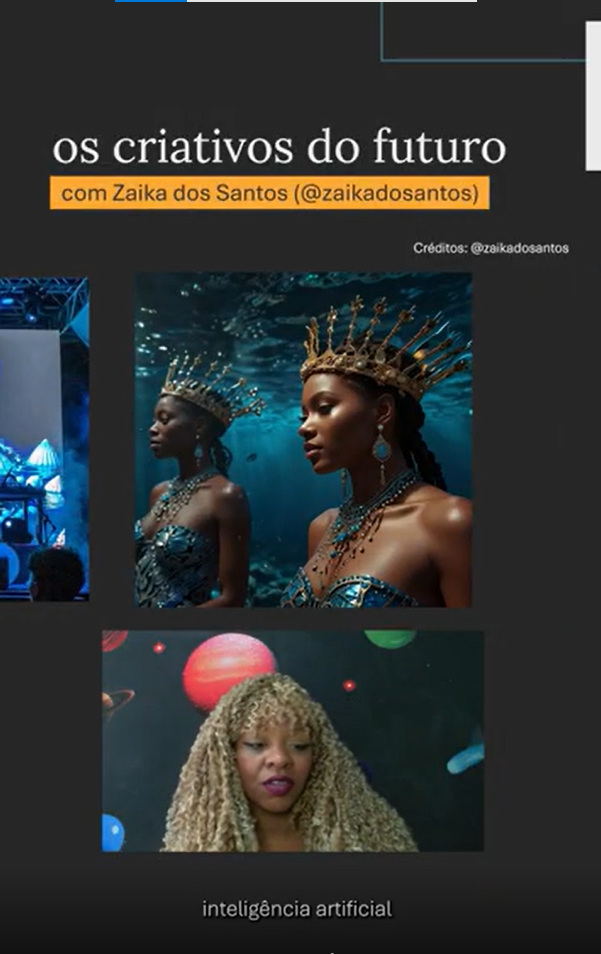
For Zaika dos Santos, Artificial Intelligence intersects the creative process structurally, without rigid separations between stages such as research, conception, production, and exhibition.
In artistic creation, AI ranges from the speculation of imaginaries — the speculative construction of pasts, presents, and futures — to complex works such as site-specific installations, performances, and immersive environments.
AI also manifests in the corporeal and performative dimensions. Zaika utilizes image generation and manipulation technologies, incorporating the body as a central element of the narrative.
Furthermore, AI plays a role in accessibility and inclusion. Zaika links digital art and interactive systems to expand access for people with disabilities, neurodivergent individuals, and audiences excluded from conventional artistic spaces. Her works invite interaction, immersion, and active participation.
In Zaika’s creative process, AI is a field of critical experimentation, allowing her to operate simultaneously across multiple layers without the need to choose a single domain of expertise.
Image 03 – Excerpt from the interview with Zaika dos Santos
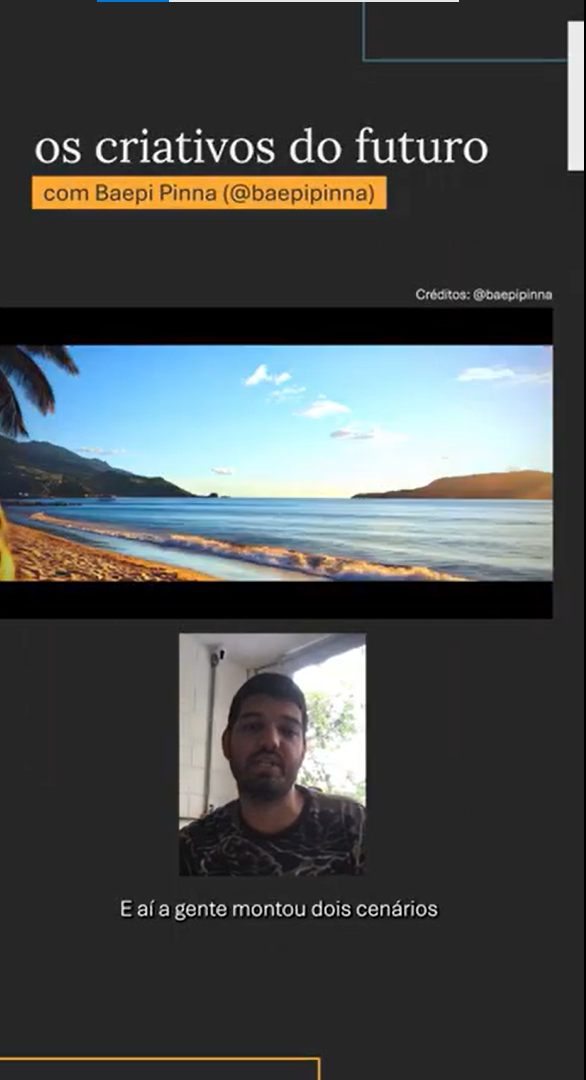
In Baepi Pinna’s work, AI is strategically integrated to ensure the feasibility of audiovisual projects, particularly within the advertising market. The technology is utilized to create images, visual concepts, and presentation materials that previously would have required larger teams and significant budgets. Its use is concentrated in the conception, visualization, and pre-production phases, allowing for the demonstration of ideas and the structuring of campaigns in a more accessible manner.
Image 04 – Excerpt from the interview with Baepi Pinna
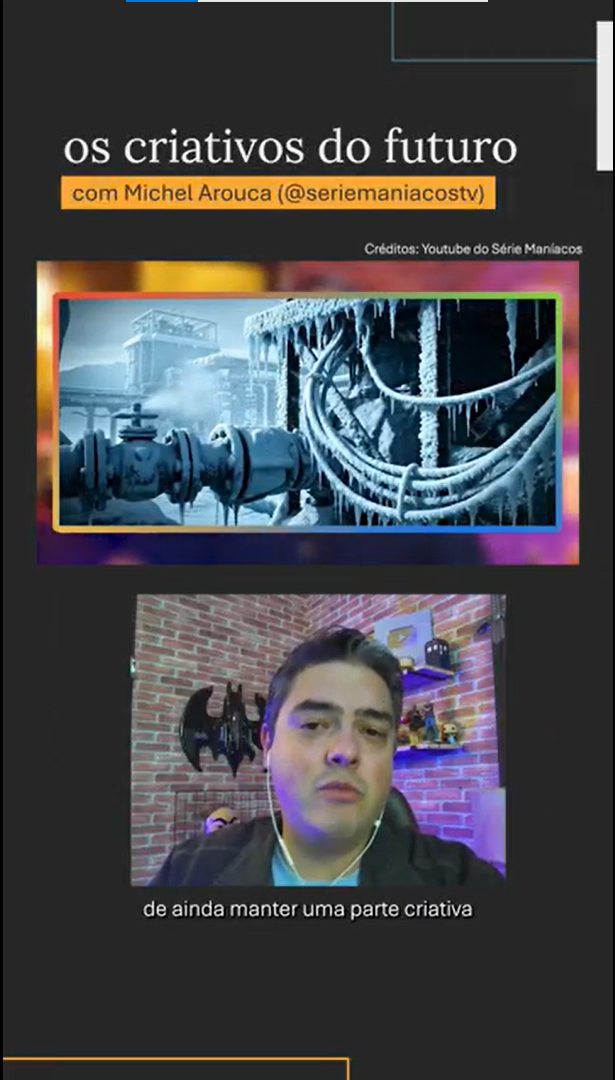
For Michel Arouca, AI is incorporated as a tool for expansion and optimization. It enters the creative process to test ideas, create visual prototypes, structure projects, and broaden the production company’s scope of work. Its use is integrated into existing collaborative processes, with artists and human teams remaining responsible for storyboarding, screenwriting, and core decision-making. AI acts as technical support that reduces time and cost without replacing human creativity or professional collaboration.
“Today we view AI as an optimization tool. I wouldn’t say it’s exactly a member of the team, because we actually hired specialists and artists to use these tools in favor of what we want to achieve. It continues to be a very collaborative process. I believe this is essential for any audiovisual project. We make a point of still maintaining a human creative element. So, for scripts, for example, we don't use any type of AI”.
Image 05 – Excerpt from the interview with Michel Arouca
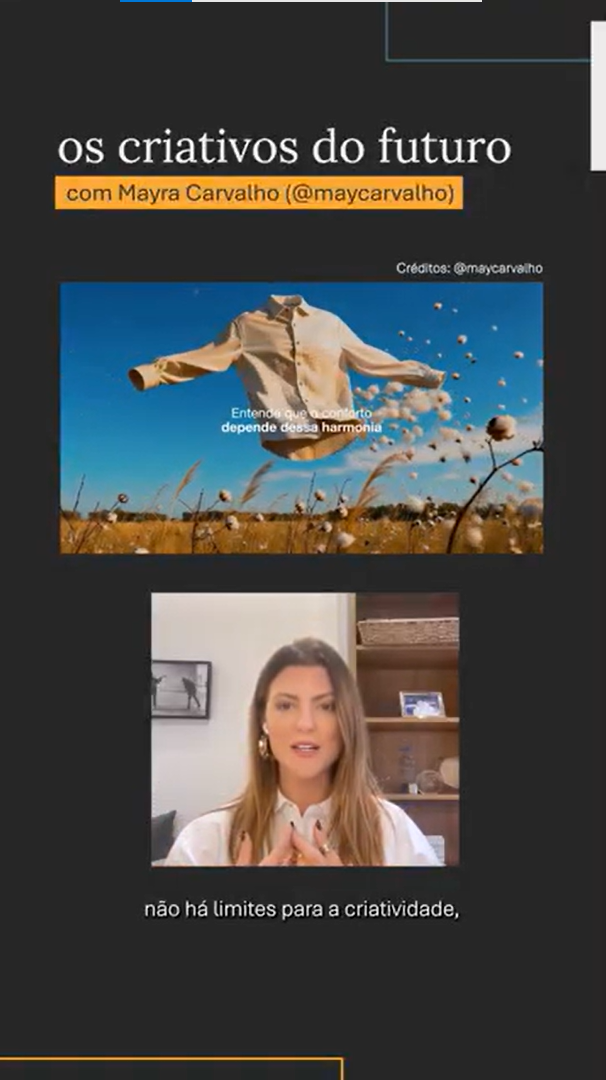
In Mayra Carvalho’s case, Artificial Intelligence has become an integral part of the creative process as a tool for design and art direction. With a background in graphic design and an extensive career in editorial and digital design, Mayra primarily uses AI for visual ideation, image creation, aesthetic direction, rapid prototyping, and the production of complete visual narratives, including both static and audiovisual pieces.
In practice, AI is involved from the very beginning of the creative process. Mayra combines various image and video generation tools to build visual concepts, test aesthetics, and simulate campaigns.
As a designer, she emphasizes that AI does not operate autonomously: the output depends on human curation, visual repertoire, and creative direction. Her prior experience in editorial design is highlighted as fundamental for guiding prompts, selecting results, and building unique storytelling, thereby avoiding generic solutions or stylistic replications.
Image 06 – Excerpt from the interview with Mayra Carvalho
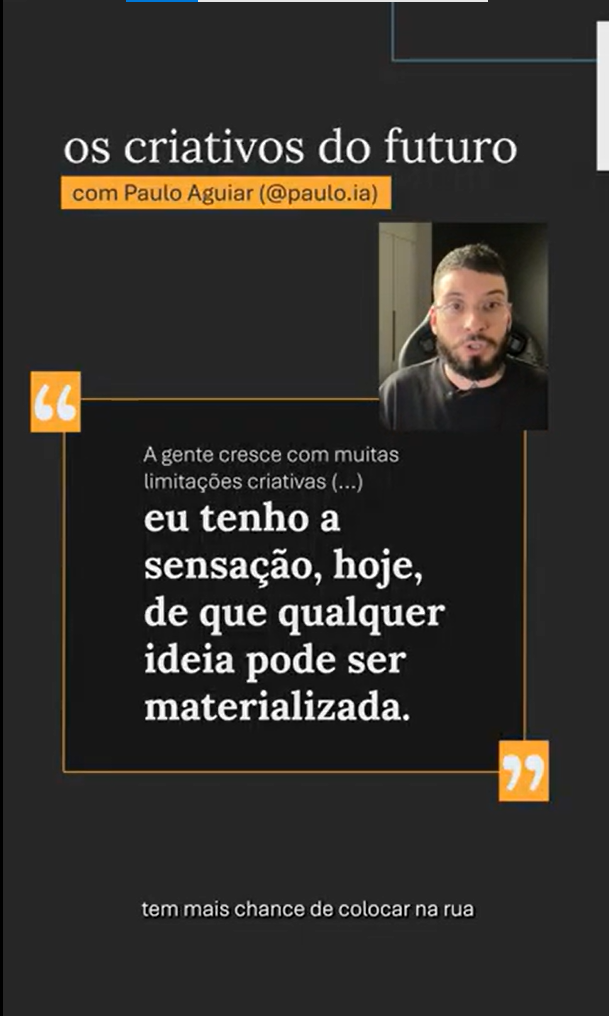
In Paulo Aguiar’s case, Artificial Intelligence is integrated into the creative process as part of a new way of creating, defined by continuous experimentation. His adoption of AI stems from a history of testing new tools and solidified when he began combining text, image, and video solutions, realizing that this articulation inaugurated a distinct mode of conceiving and developing ideas.
From this “turning point”, AI also began to structure a pedagogical practice. Paulo created CR_IA as a learning space dedicated to teaching others how to experiment with, test, and understand the workings of generative AI tools. The platform serves as an environment for monitoring a technological ecosystem in constant transformation.
In this sense, Paulo’s work articulates both creation and teaching: AI appears as both a creative tool and an object of education, requiring practice, curiosity, and patience in the face of the rapid evolution of technology. For him, AI education is a fundamental part of the contemporary creative process itself.
Image 07 – Excerpt from the interview with Paulo Aguiar
What does Artificial Intelligence allow us to do today that was previously difficult or impossible?
When asked what Artificial Intelligence has enabled in their creative work, the interviewees describe gains involving:
feasibility;
scale;
speed;
autonomy;
expansion of creative possibilities.
In many cases, it is a matter of reducing practical barriers — such as cost, time, and technical or material access — that previously limited the materialization of ideas.
In Pedro Garcia’s case, AI enables the materialization of original ideas independently, without the need for intermediaries, large teams, or high budgets. Projects that would have previously been restricted to the imagination or dependent on external conditions can now be experimented with directly. AI expands the ability to test visual languages, create original series, and develop a personal platform for aesthetic experimentation, while maintaining the "dialogue with chance" that was already present in his street photography.
In Rafael Alves’s case, AI enables something that was previously particularly difficult in History teaching: the creation of visual representations of historical figures who are poorly documented, especially within the context of Afro-Brazilian and Indigenous History and Culture. The technology allows for the creation of images, narratives, and characters that do not appear in traditional archives, expanding pedagogical resources and enabling more inclusive approaches in the classroom.
“I brought these characters [from Afro-Brazilian and Indigenous history] into the classroom, and a student argued: ‘But teacher, is this story actually real? And do we have a photo of this historical figure?’ That’s when the idea came to create an initial image. I take the information that historiography provides about that historical figure (…) I gather the elements, the setting, the context in which they lived, the clothing of those people, and I try to recreate them with artificial intelligence. In this way, we give a face and an identity to that historical figure.”
In Zaika dos Santos’s case, AI makes it possible to integrate research, artistic creation, technology, and performance within a single process, operating across multiple layers simultaneously. The artist develops interactive works, installations, and performances that combine automation, robotics, image generation, and audience-responsive systems, practices that would be extremely complex or unfeasible without the intensive use of AI technologies and code.
In Baepi Pinna’s case, the primary shift lies in economic feasibility and access to audiovisual production. AI allows for the creation of images, visual concepts, and presentation materials that previously would have required expensive infrastructures and large teams. Projects that would not have gotten off the ground due to budget constraints can now be tested, presented, and developed, making the audiovisual sector more accessible to independent creators and small studios.
“I’ve always been a strong believer in democratization. Digital cameras only democratized the audiovisual sector a little. AI democratizes it a lot. For example, a kid from Ilhabela can tell whatever story he wants using artificial intelligence.”
For Michel Arouca, AI makes it possible to expand the production company’s scope of operation, exploring projects and formats that were previously unfeasible in terms of time and cost. The technology allows for testing ideas, structuring projects, and creating visual prototypes, broadening both business and creative opportunities. The gain lies primarily in the ability to enter spaces where the company did not previously operate.
“So, it’s very much a matter of expansion, of being more practical, of being more efficient. I think all of this involves, you know, always trying to generate new opportunities and not… We didn't view our AI venture as something where we could cut costs, either in terms of money or staff. On the contrary, we said: ‘look, we’re only going to do this if it’s possible to expand.’ And that’s what we achieved. We found that path.”
For Mayra Carvalho, the primary transformation brought by AI lies in the compression of time and cost, and the reduced dependence on large production structures—particularly in editorial, advertising, and audiovisual design. She describes how processes that previously required months of work, large teams, and high budgets can now be conceived, produced, and finalized by a single person in just a few days, with professional quality.
With AI, she explains that she now exerts full control over the creative process — from the initial concept to the final image, including animation and video editing. This, she notes, was previously unthinkable, especially since her background is not in the audiovisual sector. This control does not eliminate human labor; rather, it reorganizes workflows and demands a vast repertoire, clear direction, and constant decision-making.
“In the past, you would brief the photographer, they would do the shoot, you’d receive the photos, edit them, and create the layout. Today, with artificial intelligence, you can handle 100% of the creative process. You create the image, you animate it, you do the video editing if you want.”
Mayra emphasizes that this autonomy expands creative freedom, especially for independent professionals, by reducing external interference and the need for extensive teams, though she acknowledges that the process becomes more solitary and demands greater creative responsibility from the creator.
“So you can have 100% control. It’s a job that is actually a bit more solitary. You no longer have a team where everyone does one thing, (…) but you have more autonomy, more creative freedom; you don’t have 50 people giving opinions and making changes until what you started becomes something else entirely. (…) But I think having this freedom, this autonomy to create, is the best part of the process, you know?”
Paulo Aguiar highlights that AI enables the continuous prototyping of ideas, quickly transforming abstract thoughts into testable visual or narrative versions. This “creative superpower” makes it possible to create more, experiment more, and fail faster, something that previously would have required more time, resources, or entire teams. Furthermore, AI makes it feasible to teach others how to create and experiment, expanding the reach of creative learning beyond the individual use of the tool.
“We grow up with many creative limitations (…) and today I have the feeling that any idea can be materialized (…) there is a greater chance for autonomy, a greater chance to get an idea out into the world.”
Overall, the interviews indicate that AI is not perceived as a replacement for human creativity, but rather as a means of reducing long-standing barriers within creative work, making processes that once depended on high costs, specific technical expertise, or long production cycles more accessible.
The main challenges, limitations, and concerns of using AI in creative work
When questioned about the limits, tensions, and difficulties associated with the use of Artificial Intelligence in their creative processes, the interviewees point to challenges involving technical aspects, as well as educational, ethical, copyright, economic, and institutional dimensions. In general, the interviewees recognize that incorporating AI into daily work requires time, a willingness to learn, continuous adaptation, and conscious decision-making.
For Pedro Garcia, the main challenge lies in the speed at which the tools are transforming. He highlights that working with AI requires a constant willingness to relearn and keep pace with rapid technological changes.
The need for continuous updating demands time, patience, and dedication. There is also the risk of developing an unsustainable relationship with the tool if the process is not creatively "nourishing". He reinforces that all technology is amoral, and that the core issue is the responsibility of those who create and use it.
“Everything will have good and bad sides; all technology is amoral. So, actually, what concerns me most is how I am using it and what [use] I am defending. I think that's it—taking some responsibility. But that’s the thing, there is no shortage of concerns. I think that for humanity, any great invention or anything that has happened has always generated this kind of paradox, which I think is just part of being alive.”
The challenges pointed out by Rafael Alves primarily cross educational, ethical, and structural dimensions. In the beginning, he faced technical difficulties, especially in prompt formulation, related to the generation of identical images in sequences, and in the pedagogical use of AI.
A challenge mentioned is the inequality between public and private education. Teachers in the public school system, according to him, have less access to digital literacy and AI training to apply in state and municipal schools. Rafael warns that, despite the democratizing potential of the technology, AI can deepen the educational divide if these asymmetries are not faced.
There is also concern with authorship, especially when content is generated from generic prompts, without identity. Rafael also emphasizes transparency with the viewers of the images and comic books generated with the aid of AI as an ethical principle in the use of AI in the classroom.
Zaika dos Santos points out challenges that concentrate on the structural, political, and legal levels.
Zaika points out the risk of exclusion if technological adoption is not accompanied by training, infrastructure, and public policies, recognizing that Brazil is lagging behind in digital archiving and technological education (digital literacy). For her, the challenge is not the technology itself, but the uncritical use and the lack of understanding of how it works.
Baepi Pinna highlights challenges linked to the market, regulation, authorship, and the pricing of creative work made with artificial intelligence.
One point he mentions is how quickly these tools evolve, making it difficult to master a specific specialization.
He also criticizes the slowness of legislative processes to regulate AI in the audiovisual sector, pointing out the risk that laws may be formulated based on versions of tools that quickly become obsolete.
Furthermore, Baepi explicitly mentions pricing as an emerging practical challenge. He observes that, despite the reduction of costs in traditional infrastructure (sets, extensive teams), the value of creative work shifts toward direction, narrative, curation, decision-making, and the understanding of the briefing.
According to Baepi, AI exposes a central tension in the market: if two people can generate similar images or videos, the differentiator is no longer the tool and becomes the narrative knowledge, professional experience, and the capacity to lead the creative process. In this context, charging more or less for a project depends directly on what the professional delivers beyond the technology.
Michel Arouca’s concerns are linked to the ethical use of AI.
Michel's primary concern is the malicious use of AI, especially in the context of deepfakes, which can generate disinformation, image manipulation, and negative impacts on democratic processes.
“In terms of concerns, I think we have to be very attentive to people who want to deceive others using images that look real. I think that is perhaps the big problem, you know? Dealing with disinformation, dealing with lies. We are reaching a moment where it is becoming increasingly difficult to distinguish AI from reality (…) And I am very afraid of this being used in a way that ends up harming people, you know? Who knows—maybe elections (…) some video made with that objective. So that is my concern. I think we will reach a moment where there will be some regulation, where materials made with AI might have a watermark from the tool that generated it. I think that would be very useful. I think it would be important, especially for content disseminated on social media.”
For Mayra Carvalho, the challenges are distributed among ethics, the market, and technical limits.
She points to the lack of ethics and responsibility in the use of AI as one of her greatest concerns, highlighting the existence of biases in the tools, especially when prompts are generic.
In the market, she observes that clients frequently associate AI with zero cost, ignoring the costs of the tools, which are often charged in dollars.
“What worries me, I think, is the lack of ethics in creation. We have to have responsibility when we are creating, you know? One thing I always tell my students is that when we are creating an image, a narrative, we need to be careful with representation and diversity. These AI tools have very strong biases. So, for example, if you input generic prompts (…) if you put in ‘CEO,’ a woman doesn't appear, a white man appears, you understand? So we have to take care to write the prompt correctly, to generate diverse people, to generate representation. It’s very much a question of ethics, really.”
“I also have the impression that brands think that, because it is artificial intelligence, you do it in one day and that they can also pay super cheap. And that’s not how it works. Behind the artificial intelligence, for example, is a professional who has 20 years of experience, of visual repertoire, to add to that. We use different artificial intelligence tools in the creative process (…) and they are all charged in dollars.”
Paulo Aguiar emphasizes the challenges related to training and the superficial or uncritical use of AI.
A point of challenge he notes is that learning AI requires daily practice, as the tools change all the time.
For him, the greatest challenge is developing critical judgment and good taste — elements that are difficult to teach and fundamental to the creative use of AI.
He observes, as a limitation, that many people use AI only to do the same things faster and cheaper, without exploring its inventive potential to create something new.
Paulo points to concerns regarding abusive content and its impact on vulnerable audiences.
“Another thing that concerns me is the lack of moderation that various platforms have for abusive content, child exploitation material, sexual content and various other types of content—which is this dark side of artificial intelligence that we talk so little about, but that leaves so many people vulnerable, especially children and adolescents.”
Authorship and Responsibility in AI-assisted creation
When questioned about authorship and responsibility in creative works involving the use of Artificial Intelligence, the interviewees do not present a homogeneous view, but they share the perception that authorship does not disappear with the technology. Instead, it reconfigures itself toward intention, creative direction, curation, and human decision-making.
For Pedro Garcia, authorship is linked to the micro-decisions made throughout the creative process. Even when AI introduces elements of chance and unpredictability, it is the creator who chooses, adjusts, discards, and directs the results.
Authorship is not perceived as a creative or identity-related problem. The main challenge lies in the commercial and legal fields, especially regarding the circulation of works.
Pedro reinforces that technology is amoral: responsibility always lies with the person who decides how to use it.
“Without getting into a judicial, legal, or commercial issue, I feel that the sense of authorship is very real for those who do it; it is unquestionable because it stems from a process of many decisions (…) You define that certain characters will be there in a scene and they start talking, and when will the dialogue stop? Why does that word come after the other? So, I think what ends up driving the creation of a work are the hundreds and thousands of micro-decisions that you make based on your instinct. Therefore, if the possibility exists for these same decisions and this same instinct to be accessed, I believe that when you arrive at a work, you feel that it is yours.”
Rafael Alves associates authorship with pedagogical responsibility and transparency.
He believes that materials created with the support of AI must be explicitly identified as such, demonstrating discomfort with productions generated from generic prompts, which result in content without identity. For Rafael, authorship remains human when there is critical mediation, historiographical research, and clear pedagogical intent.
“One thing I have always made very clear to the students is transparency. I always say that that material was created with the aid of artificial intelligence, that it was not a hand-made painting, that it was not a historical photo. This needs to be explicit.”
“Artificial intelligence does not create on its own. There is human-in-the-loop there. There is historiographical research; there is the choice of elements, context, and setting. That is what gives meaning to the material.”
Zaika presents a critical view regarding the issue of authorship in creative works generated with AI intervention:
She questions simplistic readings that treat AI as a radical rupture, reminding us that art has always operated through remix, appropriation, and recombination.
She argues that authorship should be understood in a relational and procedural way, especially in interactive works, and points to the need to update the legal debate on copyright, considering practices already established in digital art, copyleft, and open licenses.
“I think the first challenge is regarding artists and creatives understanding the discussion about copyright. This is a conversation that hasn't happened much in the field of arts. It doesn't happen that often within art schools, nor within the creative field itself. At the same time, we still have copyright legislation that needs to undergo an update. And it was in this context that I also began to develop more on this theme, because when I studied audiovisual, I ended up studying Creative Commons, copyleft, and copyright.”
Baepi Pinna describes authorship as a confusing and still largely unresolved topic, especially in the audiovisual sector.
For him, responsibility must always rest with those who are producing, directing, and validating the final result. He draws parallels with existing debates on plagiarism: if something is excessively similar to someone else's work, the problem is not with the tool, but with the person who used it. AI does not eliminate authorship, but shifts the focus toward direction, narrative, and creative decision-making.
"My feeling regarding authorship is that this is a very complex debate, and I don't always know exactly how to answer. (…) Tools like Midjourney, for example, were created based on training from everything that existed on the internet at that time (…) And that’s where the doubt comes in: the tool is generating things inspired by my work. When we take an example like Wes Anderson, who has a very unique language, it becomes easy to see. AI can produce images and scenes in his style.
(…) Today, anyone can generate something 'in the style of Wes Anderson' because the AI was trained with images from his films. So authorship becomes confusing, because you are now able to produce something inspired by that language. (…) And, in practice, we avoid doing that because we understand that we would be copying an identity. But, at the same time, when we think of directors like Tarantino (…), he is inspired by a lot of things (…). He uses references all the time. So the question remains: to what extent is having a reference a problem? I don’t think it is. On the contrary, the ideal is for all of us to have as many references as possible to produce our own work.”
Michel Arouca understands authorship as multi-layered.
The original idea, planning, and project direction remain human, and the use of AI does not automatically transfer authorship to the machine.
“I think that authorship today in projects coming from AI happens in several layers. I believe two things can be true at the same time. There is a whole study that was done before any prompt: briefing, decisions, and human-led creative direction. From that comes the prompt, and then the final result. So, for me, authorship is much more linked to who had the original idea, to who planned the project. Unless the prompt engineer created absolutely everything, from scratch, without any kind of prior direction. But, if there was planning, if there was a team or people behind the ideas, that is where we can consider the authorship of these projects.”
Mayra Carvalho associates authorship with human repertoire and creative direction.
She reinforces that AI tools do not operate alone: without curation, intention, and visual background, the results tend to be generic. She also expresses concern regarding the use of recognizable artists' styles and the fragility of the authorship debate in Brazil.
“I think that the artificial intelligence tool alone, without a person directing it, is nothing. The greatest asset of a creative, a designer, a professional, is our human repertoire. Without our repertoire, without our curation, we have no way to provide the input for artificial intelligence. So, when we create something with AI, relies heavily on the background that the person has.
Behind artificial intelligence, there is often a professional with 20 years of visual repertoire, of references, of experience, which is what truly adds value to the work. I also see that the debate on authorship is still very fragile, especially here in Brazil. We need to be careful, for example, with the use of very specific artists' styles, because that’s where an important ethical and authorial issue comes in.
And there is also responsibility in creation. When we are creating images or narratives with AI, it is necessary to be careful with representation and diversity, because the tools have very strong biases. If you use generic prompts, the results come out biased. So, authorship also involves these conscious choices that we make during the process.”*
Paulo Aguiar describes authorship as subjective and nuanced.
The higher the level of human input inserted into the prompt, the greater the feeling of authorship. Generic prompts tend to generate generic results, in which he does not recognize himself as the author. For Paulo, creativity, good taste, and critical judgment are human elements that AI does not replace.
“The issue of authorship, for me, is very subjective. Each person will have a different perception of how authorial something is or isn't. In my case, the more human material I put into the prompt – references, context, intention – the more I feel like the author of what the AI returns. When the prompt is very generic, the response also comes back generic. And then I can't recognize myself as the owner of that result. It feels like it has no personality, no intention there. So, for me, authorship is closely linked to the level of human elaboration.
AI doesn't imagine anything on its own. If something was created, it's because someone imagined it first. AI responds to stimuli; it is not proactive. There is also a part that I think is very human, which is the act of choosing. Creativity, good taste, and critical judgment. AI generates various possibilities, but choosing what makes sense, what is good, what represents something—that remains entirely human. Perhaps this is one of the most difficult things to teach people.”
Future Perspectives: Creative Work and AI
When answering the questions "how do you see the future of creative work using AI?" and "what advice would you give to creative professionals regarding the use of AI?", the interviewees present visions that combine enthusiasm, caution, and pragmatism, reflecting their professional trajectories and specific fields of operation. The statements point to multiple possible futures but reveal shared expectations regarding continuous adaptation, learning, and responsibility in the use of technology.
For Pedro Garcia, the future of creation with Artificial Intelligence is tied to the expansion of creative autonomy and the possibility for more people to materialize ideas that previously remained only in the realm of imagination.
He views AI as a tool that reduces intermediaries and expands the field of expression, allowing narratives, worldviews, and aesthetic experimentations to take shape even outside traditional production structures. At the same time, Pedro emphasizes that this future demands a deep and continuous relationship with the tools.
His advice for those starting out is to develop a “nourishing” relationship with AI, based on curiosity, pleasure in the process, and creative self-knowledge, as the accelerated pace of technological change requires constant relearning.
“What excites me is the number of people who will be able to tell stories using those resources I mentioned—not just for mainstream appeal, like Marvel or big special effects, but actually traveling through time, creating pasts, presents, futures… (…) So I think about how many people have visions of what humanity is, what it means to be human, where we came from, where we are going—of a much more philosophical nature—who also won’t be able to tell those stories. And in the end, we abandon the perception that we, as humanity, have of ourselves. Which I think is the great role of art: guiding a perception and an evolution of humanity.”
Zaika dos Santos sees the future of creative work as increasingly hybrid, crossing art, science, technology, and politics. For her, AI represents the continuity of practices already present in digital and generative art.
According to Zaika, the future of creation depends on the ability to understand technology in depth, including its technical, historical, and legal aspects.
Her advice for those starting out is not to limit themselves to a superficial use of the tools: it is fundamental to understand how they work, question their assumptions, recognize their biases, and adopt a critical stance. For her, AI expands creative possibilities but demands awareness and responsibility.
“So, I think it is very fundamental, first, to start from a place of reading—actually reading about the history of digital art, and also reading about how automation systems emerge. (…) It’s not enough to just say 'I want to talk about artificial intelligence'; let’s find out how it happened (…) I also like to reflect on the Industrial Revolution and the fears people had (…) today, with all this fear of looking at artificial intelligence and saying 'oh, the Terminator is coming' (…) that is a truly romanticized view.
(…) You can't just use the tool for the tool's sake (…) okay, I am a creative as well, but I don't want to be a creative who is just there in a 'usual' way in the digital space. I also want to build collaboratively; I also want to apply my critical eye to this construction. So, I think that’s it: it’s about leaving the role of the spectator and truly moving into the role of the creative, after all, a creator, right? Creativity is there to be used.”
Baepi Pinna describes the future of creative work, especially in the audiovisual sector, as a scenario where adaptation is no longer optional. He believes that AI does not eliminate creative work but redefines its conditions, making the market more competitive and demanding. The technology expands access to production and reduces budgetary barriers, but it does not replace repertoire, narrative, or authorial vision.
His advice for creative professionals starting out is that continuous learning, experimenting with tools, and accepting that transformation is part of the craft are essential. Those who refuse to adapt tend to lose ground, while those who develop creative vision and responsibility manage to stand out.
“Man, I think there is advice for two groups of people, right? If you are from the audiovisual field, if you already work with this, don’t be afraid. (…) Because, honestly, I believe that learning AI for audiovisual work will take you maybe three or four months (…) and after that, it's constant evolution. The tools keep changing, so you always have to be tuned in, always up to date with things. But don’t be afraid (…) Audiovisual professionals will still continue to have a lot of prominence. Will they lose ground to people who do everything on their own? They will. But if they learn, they won't. So the advice for the audiovisual crowd is this: learn, because you have the upper hand. And for those starting out, I would say: it makes no sense not to learn AI.”
For Michel Arouca, the future of creation with AI is associated with the expansion of possibilities, rather than the reduction of human labor.
He sees the technology as a means to make previously unfeasible projects viable, expanding the scope of action for producers and creators, including independent ones. At the same time, he demonstrates concern regarding the misuse of AI, especially in contexts of disinformation and deepfakes.
His advice for creative professionals is to study, experiment, and not become complacent. AI tends to become a structural part of creative work, and those who do not stay updated run the risk of becoming irrelevant within their own market.
“I think independent producers have many opportunities to evolve significantly. I don't know if it goes as far as competing with major production companies, but it is a path I highly recommend. For the independent producer, for the content creator, starting to study and finding new opportunities to secure projects on your own is always good.
I think it’s important that we don't become dinosaurs of our own field, of our own segment, you know? Because as comfortable as you may be, as good as you may be at what you do, it is very important to keep an eye on what is coming, on what is happening. And AI (…) its evolution is constant. The tool we used last week, we don't use anymore this week. There is already another one that’s better, cheaper, more practical, faster, more efficient. So, I think it is vital for those who want to renew themselves and stay relevant to keep an eye on this. Keep an eye on the opportunities involving AI.”
Mayra Carvalho sees the future of creative work as an environment marked by the emergence of new roles and specializations, such as designers, creative directors, and filmmakers who work directly with AI.
For her, technology does not diminish the importance of the creative professional; instead, it places even higher value on those with repertoire, curation skills, and critical judgment.
Her advice for creative professionals regarding the use of AI is to learn by doing, experiment constantly, and take ethical responsibility for what they create. Mayra emphasizes that AI does not work alone—without human direction, the results tend to be generic. For her, the future belongs to those who can combine technology with creative background and ethical awareness.
“If I could give advice on using artificial intelligence, it would be: don't be afraid to just dive in, you know? In the beginning, we’re going to make mistakes; you’ll aim for one thing and something else will come out, but we have to keep testing, keep diving deeper. (…) But now, the tools and interfaces are much easier, and we have a lot of room for experimentation, so it’s about not being afraid to create… and you evolve bit by bit. In life, we have to allow ourselves to be beginners, right? No one starts a hobby or a sport already being a pro athlete. It’s the same with artificial intelligence. Allow yourself to be a beginner and just go for it, dive in.”
Paulo Aguiar projects a future where AI becomes naturalized in creative work, similar to what happened with the internet — something that tends to become invisible and natural.
For him, technology offers a “creative superpower”, allowing more people to create, prototype, and test ideas quickly. However, this potential is only realized through continuous learning. His advice for creative professionals starting out is to dedicate daily time to experimentation and to be patient with the process, as tools change constantly.
Paulo emphasizes that creativity, good taste, and critical judgment remain human and will increasingly be the differentiating factor in the future of creation with AI.
“I think that more and more we are becoming hybrid figures, you know—between what is human and what is technological. I see people becoming creative super-humans. Having these tools in our daily lives—I think this mixture is very important. If it’s too technological, we have a problem, and if you are creative but don’t use technological analysis, you also have a problem. Finding this balance is, I think, the most important thing for all creatives today. Because at the end of the day, these are… new ways of materializing ideas that, the more human they are, the better they become. The ability to connect with people is a very human skill. And when you use technology for that, you can expand and make those possibilities practically limitless.”
Analysis and comments
The interviews converge with the findings identified in the report Creative Futures: how artificial intelligence is transforming the creative industry in Brazil (Garrote; Ribeiro; Pimenta, 2025) regarding the re-evaluation and reconfiguration of roles and professions within the creative industry. The accounts show that, for these professionals, the adoption of AI does not translate into the replacement of human creative labor, but rather into a shift in the required competencies and forms of professional differentiation.
The incorporation of AI into creative work is associated with the need for continuous adaptation, requiring professionals to possess technical mastery of the tools, critical capacity, a creative repertoire, and an understanding of narrative processes.
The issue of authorship attribution remains controversial, even among the interviewees themselves. Although they recognize the centrality of the idea, creative direction, and human decision-making in the process, the accounts reveal uncertainties regarding the boundaries between reference, inspiration, and AI-mediated reproduction. This reinforces the perception that, for these creators, the discussion surrounding the AI-generated result (output) seems more relevant than that of the training phase (input).
Even when not directly prompted, most interviewees mentioned the constant need for updating and learning as a challenge, given the rapid evolution of AI tools. Technological transformation demands continuous learning, which may especially benefit professionals who have more available time, access to resources, support from professional networks, and training opportunities.
The interviews reinforce the importance of AI literacy as a condition to ensure that productivity gains and creative expansion do not deepen structural inequalities among creative professionals. The ability to understand how tools work—their limits, biases, and impacts—is a key element in avoiding an instrumental and passive appropriation of the technology.
The creators' accounts align with the observation, already present in the Creative Futures report, that the regulatory agenda has yet to keep pace with the economic, technical, and symbolic sophistication of the phenomenon. Interviewees express concerns related to slow legislative processes and laws that quickly become outdated by failing to keep up with the speed of technological transformation.
In contrast to the broad consensus of ambiguous perceptions and uncertainties identified in the Creative Futures report, the interviews reveal a predominantly enthusiastic tone regarding the use of AI. It is worth noting that this result reflects the methodological scope adopted, related to the sampling of extreme cases, that is, professionals who have actively incorporated AI into their creative processes.
Although the findings are not generalizable to the entire creative industry, the extreme case methodology serves precisely to test the contrary hypothesis: that AI necessarily represents a cause of job losses and creative impoverishment. The accounts of the creators interviewed demonstrate that, once barriers related to tool access, technical training, and digital literacy are overcome, AI can act as a factor in the amplification of artistic expression, rather than its destruction.
Conclusion
What did we seek to answer with this study?
This report sought to investigate how creative industry professionals in Brazil, who use Artificial Intelligence in an advanced and consistent manner, incorporate these tools into their routines and how they perceive their effects on creative processes, authorship, and the future of creative work. Through in-depth qualitative interviews, we aimed to understand under what conditions the transformation of creative work becomes possible and for whom. The selection of interviewees followed an extreme case sampling strategy, prioritizing professionals who adopt AI in a transformative way, as these profiles allow for a clearer observation of the competencies, conditions, and tensions involved in this incorporation.
What did we find?
The interviews show that generative AI is tangibly embedded in the creative work of industry professionals in Brazil. Uses range from occasional support to end-to-end integration across the entire process, from ideation to production, including prototyping, curation, and the communication of ideas.
The early adoption among the interviewees is associated with prior trajectories of digital literacy, technological curiosity, technical training, or the influence of close professional networks. Where this repertoire was not previously established, interviewees reported an active pursuit of learning and gradual adaptation. In the cases analyzed, AI does not appear as a substitute for human creativity, but as a reorganizer of workflows and means of materializing ideas, capable of expanding creative autonomy, reducing cost and time barriers, and making projects viable that previously depended on larger structures, teams, or budgets.
The accounts also highlight recurring challenges: the speed at which tools are updated demands constant learning and hinders stable specializations; ethical and authorial issues appear as cross-cutting themes, with concerns regarding biases, transparency, and the malicious use of AI. Authorship is understood as being reconfigured, shifting toward the human layers of intention, curation, and decision-making.
Finally, the positive effects are conditional upon the context, such as access to tools, learning time, prior creative repertoire, and creative direction capacity. Where these conditions are absent, risks of superficial or uncritical use emerge; this reinforces that the enthusiastic tone identified in the interviews reflects the methodological scope, rather than the general state of the Brazilian creative industry.
And why does it matter?
By listening to creative professionals who have incorporated AI into their processes in a transformative and consistent way, this study contributes to a qualified debate on the role of this new technology in the Brazilian creative industry. The analysis suggests that the effects of generative AI on creative work are neither uniform nor inevitable; instead, they depend on conditions of access, literacy, and repertoire that must be understood before being evaluated. The extreme case methodology, by investigating where the phenomenon manifests most intensely, allows for the identification of hypotheses about the future of creation with AI and shifts the debate from abstract oppositions toward other questions, such as: Under what conditions does AI expand creative opportunities? What barriers must be overcome? And for whom is this "future" already available?
In this context, the findings engage with broader discussions on professional training, productive inclusion, and technological regulation in the creative sector, indicating that understanding the conditions for adoption is an important step that can guide policies, educational initiatives, and sectoral strategies to make the benefits of generative AI widely accessible.
Reglab Methodology Annex
Title
The Creatives of the Future: how AI is redesigning Brazil’s creative industry, through the voices of its practitioners.
Research question
How do creative industry professionals who use AI in a transformative, consistent way incorporate these tools into their work routines, and how do they perceive their impacts on creative processes, authorship, and the future of creation?
Methodology summary
This stage of the research aimed to investigate, through in-depth interviews with creative industry professionals, how Artificial Intelligence is being incorporated into creative processes, identifying transformations in professional practices, perceptions of authorship, challenges, and perspectives on the future of creative work.
The selection of interviewees followed an extreme case sampling strategy, prioritizing individuals who stand out for their intensive or transformative use of these technologies in their workflows.
The study serves as a complementary layer to the report Creative Futures: How Artificial Intelligence is Transforming the Creative Industry in Brazil (1st Edition – 2025), deepening the insights, practices, and meanings attributed to the adoption of generative AI in the creative sector.
Data collection
Data collection was carried out through semi-structured qualitative interviews, conducted with creative industry professionals who already use Artificial Intelligence on a recurring basis in their work processes. The selection of participants followed an purposive strategy guided by the logic of extreme case sampling, prioritizing individuals who stand out for their advanced or transformative use of these technologies in their professional practices.
Extreme case sampling is a purposeful sampling technique used in qualitative research to investigate phenomena through cases with intense, unusual, or revealing characteristics. This type of sampling allows for the exploration of patterns and implications from situations where the phenomenon manifests most clearly, contributing to hypothesis generation and analytical deepening. In this study, the methodology was adapted for the creative industry, focusing on professionals operating at the frontier of AI use, allowing for the observation of transformations, tensions, and opportunities associated with the incorporation of these tools.
Participant identification was conducted through social media searches, analysis of public profiles, and referrals within the professional network itself. Participation was voluntary, and interviewees signed an informed consent form.
The interviews were conducted individually, in an online format, based on a script reviewed by more than one Reglab researcher. The script covered questions related to the trajectory of AI adoption, forms of use in creative processes, perceptions of authorship, challenges faced, and expectations regarding the future of the creative industry. The conversations were recorded via audio and video and transcribed for analysis.
The collection period occurred between September and November 2025.
*Source: PALINKAS, Lawrence A. et al. Purposeful sampling for qualitative data collection and analysis in mixed method implementation research. Administration and Policy in Mental Health and Mental Health Services Research, v. 42, n. 5, p. 533–544, 2015. Available at: https://pmc.ncbi.nlm.nih.gov/articles/PMC4012002/
Data analysis
The data analysis was conducted through thematic analysis, suitable for exploratory qualitative investigations in contexts of high complexity and technological transformation.
The interviews were transcribed in full and analyzed, allowing for the identification of patterns, recurrences, and divergences among the accounts.
Based on this process, analytical categories were constructed, such as:
AI adoption trajectory;
forms of use in creative processes;
perceptions of authorship;
challenges and limitations;
expectations regarding the future of creative work.
The analytical process was supported by Artificial Intelligence tools to assist in organizing and systematizing the data, without replacing the qualitative interpretation conducted by the research team.
The analysis period occurred between November and December 2025.
Bias Reduction Procedures
Methodological strategies were adopted to increase the consistency and reliability of the results:
Use of a previously defined and reviewed interview script, ensuring consistency in the conduct of interviews;
Double internal validation of instruments and content, with the participation of more than one Reglab researcher;
Use of Artificial Intelligence tools as a complementary instrument for organization and checking, and not as a replacement for human analysis;
Grounding in consolidated theoretical-methodological references in qualitative research.
Methodological Limitations
This study presents limitations inherent to its methodological design. Extreme case sampling prevents the generalization of results to the entire creative industry, favoring professionals in advanced stages of AI adoption.
The profile of the interviewees, who are closer to emerging technologies and open to experimentation, may generate an optimism bias regarding AI, failing to capture more critical perceptions from other segments.
The self-reported nature of the interviews, based on the participants' perceptions, may not fully reflect the complexity of work processes.
Given the rapid evolution of AI tools, findings should be interpreted within a dynamic context, subject to changes that may alter practices, perceptions, and operational models.
Software use
ChatGPT: used as an auxiliary tool for organizing and cleaning interview transcriptions, contributing to textual standardization.
Notion AI: used to support content structuring, initial data categorization, and organization of analytical inputs.
Riverside.fm: for recording the interviews.
Adobe Creative Cloud: video editing, layout design, and finalization of graphics and illustrations.
Gemini: used as a tool for the translation and linguistic refinement of the report from Brazilian Portuguese to English.
The use of these tools was complementary and did not replace the critical analysis conducted by the research team, which was responsible for data interpretation, defining analytical categories, and validating findings.
Ethical guidelines
This research was funded by Google Brasil Internet Ltda. To ensure the integrity of this work, the authors developed, conducted, and analyzed the study independently, without interference from the company, which also did not influence or interfere with the interpretation of the results.
The interviewees were not remunerated, and the authors maintain full professional independence and responsibility for the content and conclusions of this work.