About Reglab
We are a private research center specializing in the media and technology sector, supporting companies, associations, and policymakers in making strategic decisions based on data and evidence.
Learn more at www.reglab.com.br.
About the Fellowship on Innovation and Copyright series
The Fellowship on Innovation and Copyright series features articles by invited authors who explore topics in digital governance, synthesizing research, presenting empirical evidence, or contributing new information to the debate. The articles follow Reglab’s standards of methodological transparency, and their content is the sole responsibility of the authors.
Acknowledgements
Executive Director: Pedro Henrique Ramos
Research Director: Marina Gonçalves Garrote
Author: João Jatahy
Researcher: João Jatahy
Final layout: Larissa Camargo
Suggested Citation: JATAHY, J. The Cost of Distance: Digitalization and Formalization of Software Registration in Brazil. São Paulo: Reglab, 2026.
Executive Summary
Digitalizing public services is often presented as a natural path to expanding access to rights and reducing administrative disparities. However, there is still limited empirical evidence on whether this type of institutional transformation actually changes the behavior of actors in regions historically underserved by the government.
In 2017, the National Institute of Industrial Property (Instituto Nacional da Propriedade Industrial – INPI, in portuguese) implemented the Electronic Computer Program Registration system (Programa de Computador Eletrônico em formato eletrônico – e-RPC, in portuguese), digitalizing the software registration procedure. This change reduced transaction costs and removed part of the logistical barriers associated with accessing the system, creating an institutional shock suitable for assessing whether digitalization can increase the formalization of copyright across the country.
To do so, we use an econometric Differences-in-Differences model to examine whether digitalizing software registration increased the number of software filings at INPI, particularly in locations that had been more heavily affected by access costs.
The results indicate that digitalization produced heterogeneous effects, benefiting more strongly those regions previously penalized by costs associated with geographic distance. This evidence suggests that digitalizing public services can serve as a mechanism for territorial equity by reshaping incentives to access formal institutions and expanding the protection of rights nationwide.
Introduction
Digitalizing public services has been used as a tool to reduce administrative barriers and expand access to rights (as provided in Article 8 (I) of Decree No. 12,069/2024). Although digital solutions have been increasingly adopted across Brazil’s public administration, such as the gov.br platform, there is still limited empirical evidence on how these changes affect the territorial distribution of access to services, especially in procedures that have historically required in-person travel. In this context, it is relevant to assess whether the digitalization of specific administrative procedures can mitigate geographic barriers, particularly in locations most affected by high procedural travel and logistics costs.
A concrete example is the digitalization of the procedure for registering computer programs at the National Institute of Industrial Property (INPI), implemented in September 2017. Until then, registration required an in-person visit to INPI’s headquarters, filing through Regional Units, or mailing documentation (Article 13, INPI Normative Instruction 11/2013). The introduction of the electronic system eliminated these in-person and physical steps, changing how users accessed the country’s copyright protection system for software. Today, the procedure is carried out entirely through the e-RPC system, which allows forms to be completed and the required documentation to be submitted exclusively online.
The physical requirements of the previous model imposed significant transaction costs, especially for applicants located far from INPI’s physical infrastructure. The introduction of electronic registration reduced these frictions by eliminating the need for travel, intermediation, or the shipment of physical documents. By lowering access costs, digitalization increases incentives to formalize, with the potential to raise demand for these services. Although the reform was nationwide, it is particularly relevant for those located farther from INPI’s headquarters, who faced the highest initial costs.
This study examines whether the digitalization of computer program registration had a stronger impact in regions that faced greater access barriers before implementation. To do so, it analyzes administrative data on software registrations from 2010 to 2024, comparing trends before and after the introduction of electronic registration across regions with different INPI access costs associated with geographic location. If registrations increased relatively more in regions with higher access costs, this would indicate that digitalization helped reduce territorial barriers to registration.
This study contributes to the recent momentum of Brazil’s digital government agenda, which aims to address barriers to public services through digital solutions. The results indicate that growth in the number of software filings was greater as distance from INPI’s headquarters increased. This pattern is consistent with the hypothesis that the access costs imposed by the in-person model (such as mailing costs) were meaningful, and that eliminating them produced a stronger response in places where those costs were higher. The research therefore provides evidence that reducing administrative frictions through digitalization can change user behavior and expand the use of public services.
Institutional Context
2.1. Software Property Rights
In Brazil, computer programs are protected under the copyright regime, governed by the Software Law (Law No. 9,609/1998) and, secondarily, by the Copyright Law (Law No. 9,610/1998). Under Decree No. 2,556/1998, registration is administered by the National Institute of Industrial Property (INPI). Legal protection for software arises automatically upon creation of the work, regardless of any formalities. Registration, therefore, is not required to establish the right itself, but functions as an institutional, declaratory mechanism of ownership (as provided in Article 2, § 3, of Law No. 9,609/1998 and Article 18 of Law No. 9,610/1998).
In practice, software registration plays an important role by providing evidence of authorship and the date of creation, facilitating licensing and assignment transactions, and strengthening the rights holder’s position in potential legal disputes. Because registration is voluntary, the decision to register a computer program depends on the balance between the legal benefits of formalization and the costs associated with accessing the system. This feature makes software registration particularly informative for analyzing how institutional changes can affect access costs and, consequently, the decision to rely on formal rights.
2.2. Inequality in Software Property Rights
Software registration at INPI is highly uneven across Brazilian municipalities, as illustrated in Figure 1. In 2016, the last full year before digitalization, only 211 municipalities filed at least one application. Of these, nearly half (101 municipalities) filed just a single application over the course of the year. Looking at the broader ranking, the concentration is even more pronounced. The municipality of São Paulo led with 246 filings (approximately 14% of the national total), followed by Campinas (10%) and Rio de Janeiro (8%). Considering the 10 municipalities with the highest number of filings, which represent roughly 5% of the municipalities that filed that year, they account for about 58% of all registrations in 2016.
Figure 1 Concentration: Cumulative Share of Filings by Municipality in 2016.
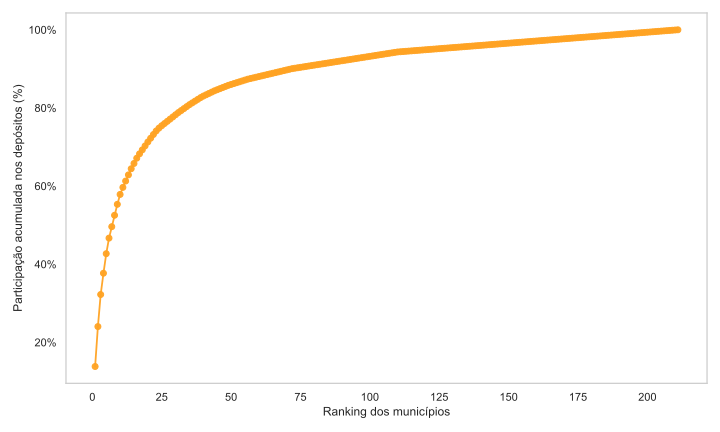
Source: Author’s calculations based on INPI Yearbook data (2025). Note. The figure shows the cumulative distribution of the number of software filings by municipality in 2016, ordered from the highest to the lowest number of registrations. The horizontal axis represents the ranking of municipalities with at least one filing that year, and the vertical axis shows the cumulative share of total filings.
The high concentration observed in the distribution of software filings across Brazilian municipalities can also be examined over time. Figure 2 presents the annual evolution of the Gini index for software filings, which measures the degree of concentration in the distribution. The closer the index is to 1, the greater the inequality across municipalities. Over the period analyzed, there is a gradual downward trend in inequality, with an apparent acceleration starting in 2017, the year the registration system was digitalized.
Figure 2 Inequality: Evolution of the Gini Index of Software Filings (2010–2024)
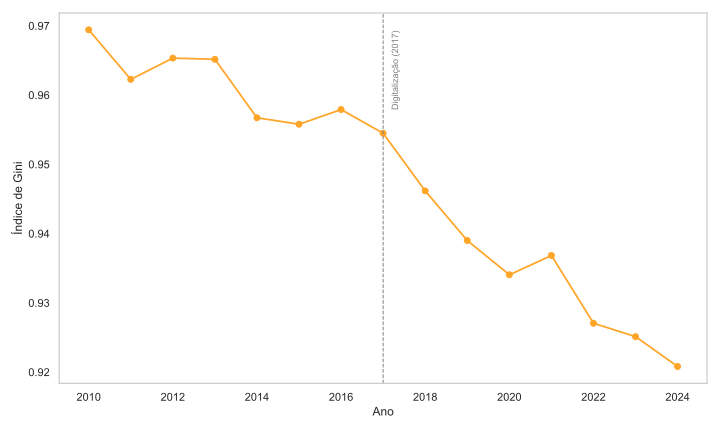
Source: Author’s calculations based on INPI Yearbook data (2025). Note. The figure presents the annual evolution of the Gini index. The Gini index was calculated from the annual distribution of computer program filings across municipalities. For each year, municipalities were ordered by number of filings, including municipalities with zero filings, and the coefficient was estimated from the cumulative sum of the distribution, following the standard Gini index formula for discrete data. The sample includes all municipalities that filed at least once in any year between 2010 and 2024 (1,140 municipalities). The high level of the index reflects the fact that a large share of Brazilian municipalities record no filings in certain years, concentrating activity in a small number of technology hubs.
The gradual reduction in inequality may be associated with the territorial expansion of use of the registration system. Over the period analyzed, the number of municipalities with at least one software filing increases. In 2016, the last full year before digitalization, only 211 municipalities recorded filings. In the first full year after the reform, in 2018, this number rose to 266 municipalities. From that point on, the number of municipalities with filings continues to grow in subsequent years, reaching 443 municipalities in 2024. This pattern suggests that use of the registration system has reached a broader set of municipalities over time.
Figure 3 Expansion: Evolution of Municipalities with Filings at INPI
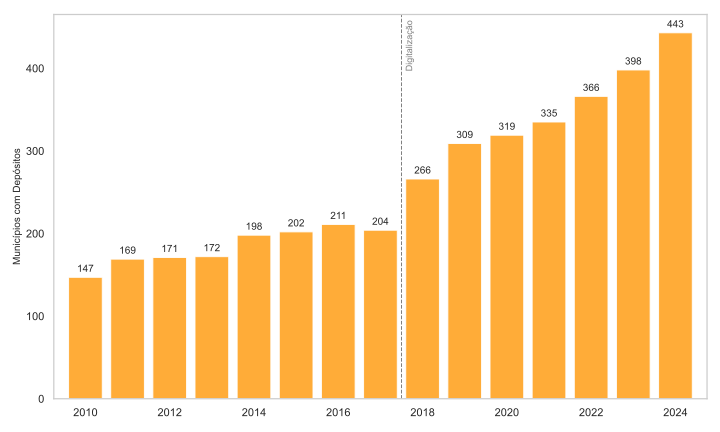
Source: Author’s calculations based on INPI Yearbook data (2025). Note. The figure shows the number of municipalities with at least one filing in the respective year.
Taken together, the results of this subsection indicate that use of the software registration system remains highly concentrated among Brazilian municipalities, but shows signs of diffusion over time. The gradual reduction in inequality observed in the distribution of filings coincides with the increase in the number of municipalities that register filings, suggesting greater participation in the formal system. The following sections examine one possible mechanism behind this dynamic: access costs to the registration system and their relationship to the geographic location of applicants.
2.3. Access Costs Under the In-Person Model
Before 2017, computer program registration filings with INPI were submitted exclusively through physical channels, under the applicable rules at the time, especially Normative Instruction No. 11/2013. Applications required the submission of hard-copy documentation at the Institute’s headquarters in Rio de Janeiro. Documentation could also be forwarded to headquarters through Regional Units located in some Brazilian municipalities. Alternatively, applicants could mail the required forms and physical media directly to headquarters via the postal service.
Because the procedure relied on in-person and physical steps, access costs varied with applicants’ geographic location. While filers based in Rio de Janeiro faced relatively low travel and processing costs, those in more distant regions incurred higher time costs and logistical expenses, along with greater uncertainty about whether the application would be processed correctly. This set of factors likely discouraged the decision to formalize copyright, since meaningful transaction costs tend to deter the use of formal systems (Friedman, Landes & Posner, 1991).
As a result, the design of the registration procedure created heterogeneity in transaction costs for access to formal copyright protection across the country. Figure 4 illustrates this relationship by showing the correlation between the number of computer program filings and distance to Rio de Janeiro in 2016, the last full year before the implementation of electronic registration. The correlation is negative: states farther from INPI’s headquarters recorded fewer filings. This descriptive evidence points to regional disparities in the use of the software registration system in the pre-digitalization period. It is a correlational association that may reflect several structural factors, including differences in the costs of accessing the registration procedure.
Figure 4 The Physical Barrier: Relationship Between Distance and Number of Filings
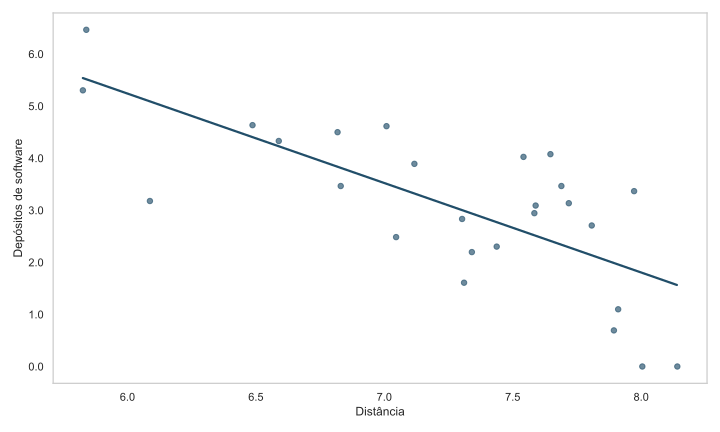
Source: Author’s calculations based on INPI Yearbook data (2025). Note. The figure shows the relationship between the number of computer program filings by state (Federative Unit, Unidade Federativa – UF, in portuguese) in 2016 and the distance from each state capital to Rio de Janeiro. Both filings and distance are in logarithmic scale. The State of Rio de Janeiro was excluded from the sample.
2.4. Institutional Change
In September 2017, the procedure for registering computer programs at INPI changed with the introduction of the Electronic Computer Program Registration system (e-RPC), established by Normative Instruction No. 74/2017. The reform made it possible to file registration requests through a digital system, with the electronic submission of all required documentation. This replaced the previous physical procedures and eliminated the need for postal shipments.
The new system was adopted rapidly. Figure 5 shows the monthly evolution of the share of applications submitted digitally relative to total filings (the sum of physical and electronic channels). The pattern indicates a rapid shift in the submission channel: until August 2017, all registrations were submitted through physical channels. In the first month after the reform, the electronic channel already accounted for more than 98% of submissions. From December 2017 onward, the electronic channel accounted for 100% of submissions.
Figure 5 The Institutional Shock: Immediate Transition to Digital (% Digital Filings)
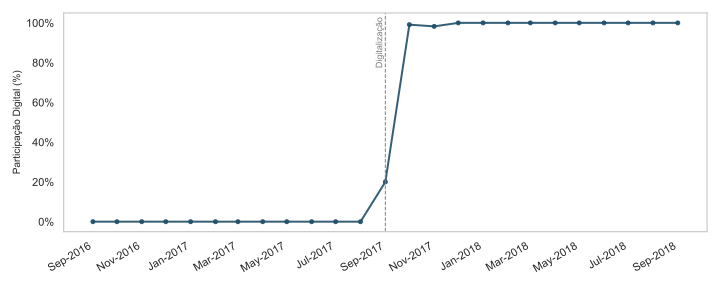
Source: Author’s calculations based on INPI Preliminary Statistics data. Note. The figure shows the monthly percentage share of the digital channel in total filings between September 2016 and September 2018.
In 2018, the first full year after digitalization, the total volume of filings grew by 51%, rising from 1,672 registrations in 2017 to 2,517 in 2018. As shown in Figure 6, this was the largest year-over-year increase in the available time series between 2001 and 2024.
This increase can be decomposed into two main factors. First, new municipalities entered the system: the number of localities with at least one filing rose from 204 in 2017 to 266 in 2018, as shown in Figure 3 above. Second, the average number of filings per municipality with at least one registration increased from 8.2 to 9.5[1] over the same period.
Figure 6 The Spike in Formalization: Annual Evolution and Growth Rate of Filings
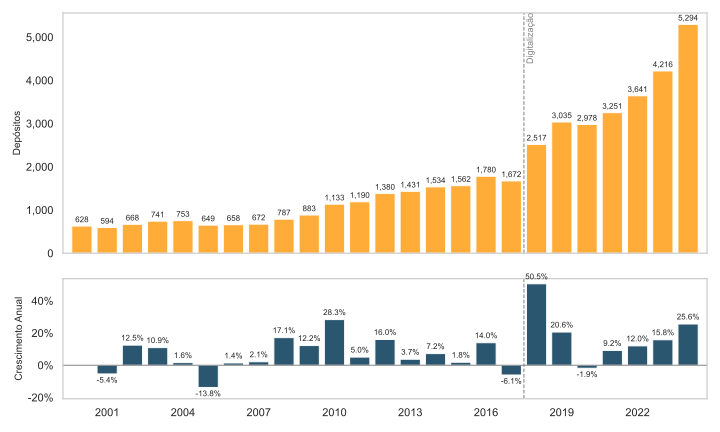
Source: Author’s calculations based on the INPI Yearbook (2025). Note. The top panel shows the annual number of computer program filings; the bottom panel details the percentage change relative to the previous year.
This expansion in the volume of registrations is consistent with mechanisms that reduce transaction costs. By replacing physical procedures with a fully digital system, the reform would be expected to reduce cost components associated with geographic distance. Lower access costs, in turn, change the cost-benefit calculation of formalization, making it more accessible and expanding the set of cases in which registration becomes economically viable.
The impact of digitalization is not expected to be the same for all applicants. Cost reductions for someone based in Rio de Janeiro, who could already file in person at INPI headquarters, are likely to be smaller than for someone in Pará, who previously faced shipping costs and greater administrative uncertainty. Indeed, Pará increased from 18 filings in 2017 to 93 in 2018; Piauí from 11 to 27; and Goiás from 42 to 141. By contrast, states that already enjoyed easier physical access did not see a comparable expansion: Rio de Janeiro registered a decline (from 187 to 133 filings), and São Paulo remained stable with a slight decrease (from 533 to 529). The data in Figure 7 indicate that relative growth was more pronounced in states farther from INPI’s headquarters in Rio de Janeiro.
Figure 7 Regional Heterogeneity: Geographic Expansion of Filings After digitalization
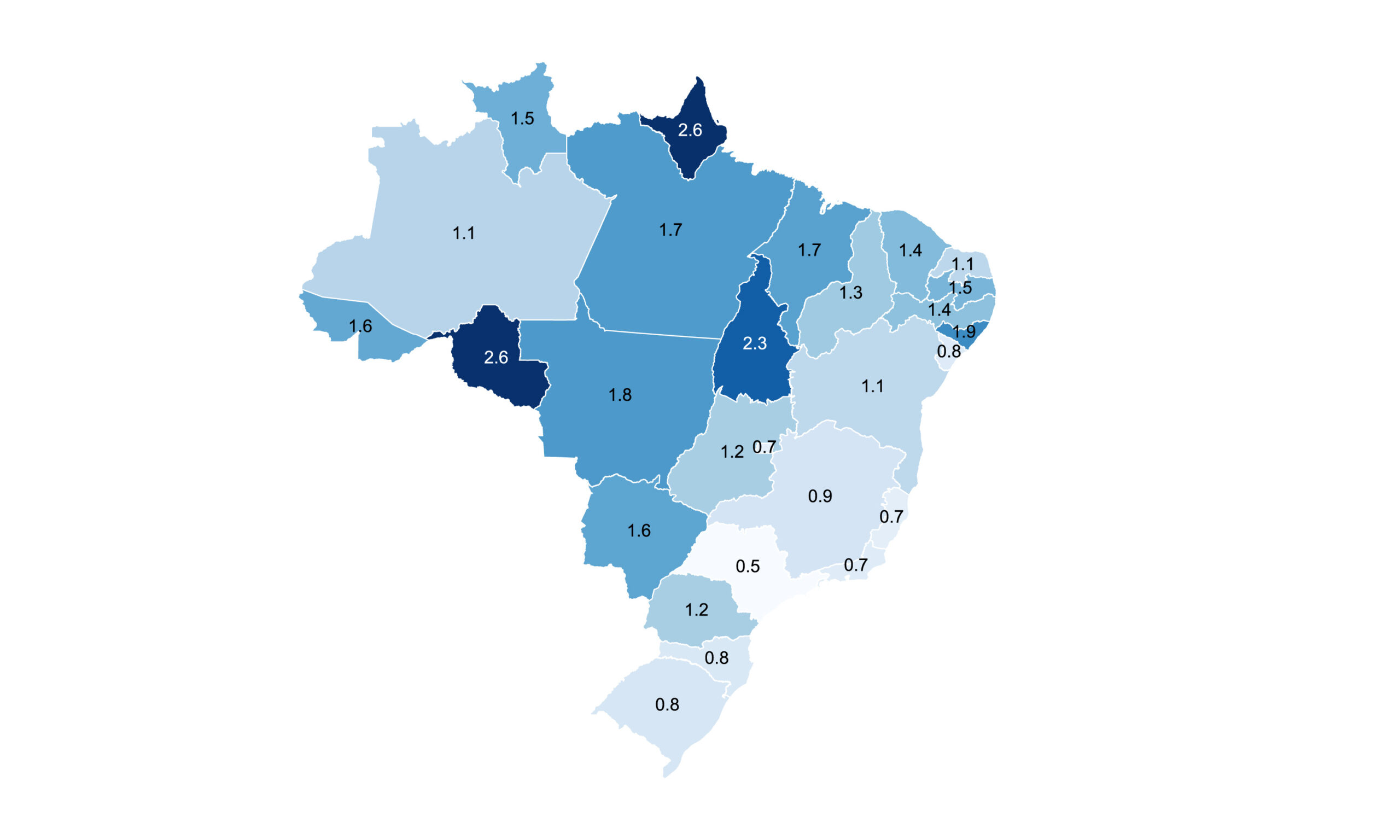
Source: Author’s calculations based on the INPI Yearbook (2025). Note. The map shows the percentage change in the volume of registrations by state (UF) between the pre-digitalization period (2011–2017) and the post-digitalization period (2018–2024).
Figure 8 presents another way to visualize this heterogeneity. To do so, the states are ordered by their distance from INPI’s headquarters in Rio de Janeiro and divided into four equally sized groups (quartiles). Group Q1 includes the closest states. Q2 and Q3 correspond to the second and third distance groups, respectively. Group Q4 includes the most distant. The chart shows that the absolute level of filings remains associated with geographic proximity: across the entire series, Q1 records the highest volumes, followed by Q2 and Q3, while Q4 remains at the lowest levels. In the period after digitalization, the figure shows that, in 2018, Q4 experienced proportionally sharper growth than Q1, with the intermediate groups following trajectories between those two extremes.
Figure 8 Growth by Distance: Evolution of Filings by Quartile
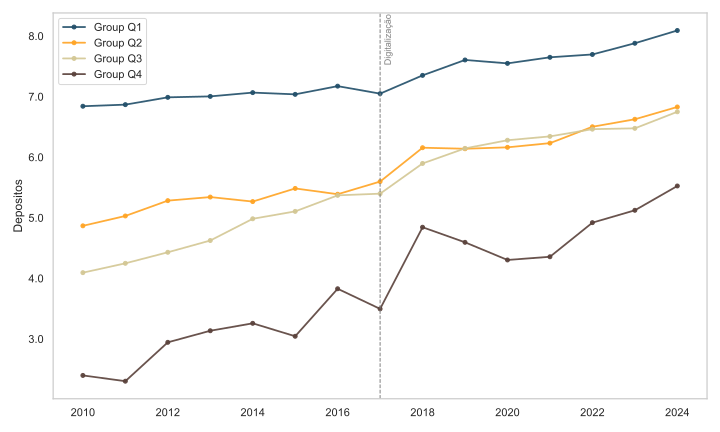
Source: Author’s calculations using INPI Yearbook data (2025). Note. The chart shows the logarithm of the annual volume of filings, grouped into distance quartiles relative to INPI’s headquarters in Rio de Janeiro. Group Q1 comprises the 25% of states with the shortest distances. Group Q4 comprises the 25% with the greatest distances. Groups Q2 and Q3 are the intermediate ranges.
Taken together, the descriptive analysis reveals three main patterns. First, the number of software filings is associated with geographic distance from INPI’s headquarters, with lower volumes observed in more distant locations in the pre-digitalization period. Second, following the implementation of electronic registration, total filings increase. Third, this growth is proportionally stronger in regions that are farther from INPI’s headquarters.
These patterns are consistent with the hypothesis that digitalization reduces access costs associated with geographic distance and, as a result, can increase demand for software formalization, especially in places that were more affected by those costs. However, the evidence presented so far is descriptive and may reflect other factors that also influence demand for registration. To assess this more rigorously, the empirical analysis that follows examines territorial variation more systematically to identify the effect of the institutional change.
Methodology Summary
This study examines whether digitalizing the registration of computer programs produced heterogeneous effects on the use of Brazil’s copyright protection system, depending on geographic distance from INPI headquarters. Although the change took place simultaneously across the country, its effects were not necessarily uniform: before digitalization, the costs of registering software varied by the applicant’s location; after the reform, the procedure was standardized nationwide.
To test this hypothesis, the study uses a continuous-treatment Differences-in-Differences strategy, assessing how geographic distance to Rio de Janeiro, where INPI is headquartered, shapes the growth of software registrations after digitalization. Identification relies on comparing changes observed in more distant municipalities, which before digitalization faced higher distance-related costs, with the behavior of municipalities closer to headquarters, which serve as the reference for estimating what would have happened in the absence of the reform (the counterfactual scenario).
The central assumption is that, absent the reform, municipalities nearer to INPI headquarters and those farther away would, on average, have exhibited similar growth rates in the number of filings. Therefore, any additional post-digitalization growth that increases with distance is interpreted as the effect of digitalization. Put simply, the premise is that, without digitalization, if filings grow by 1% in Rio de Janeiro, they would be expected to grow by roughly 1% in a more distant municipality. If, after electronic filing is implemented, the distant municipality grows by 10% while Rio de Janeiro grows by 1%, the additional 9 percentage points can be attributed to the reform’s impact on the distance-related cost component.
The study considers all municipalities that submitted at least one software application between 2010 and 2024. The analysis follows these municipalities over time, which makes it possible to estimate the reform’s impact while controlling for local specificities, such as each municipality’s productive structure or innovation culture, and for national factors that affect all localities simultaneously. To ensure precision, standard errors are adjusted to account for clustering at the state level (UF), recognizing that municipalities within the same state share similar economic and political contexts.
The full methodology, including the datasets and parameters used, is detailed at the end of the study.
Results
The empirical analysis indicates that, after digitalization, growth in computer program filings was proportionally higher in municipalities farther from INPI’s headquarters than in municipalities located closer to it.
Figure 9 shows how this difference evolves over time. Each point represents the extent to which geographic distance came to influence the growth of filings (vertical axis) in a given year (horizontal axis), always relative to 2017, which is the reference year. The vertical bars indicate the uncertainty around the estimates. When reading the chart, the interpretation can be guided by two main criteria:
- If a given year’s bar crosses the zero line, it means it is not possible to state that distance influenced growth in that period. In other words, we cannot reject the hypothesis that the distance effect is zero in that year.
- If the bar remains entirely above the zero line, the effect is statistically significant. In that case, more distant municipalities experienced proportionally higher growth in the number of filings. In other words, the greater the distance, the greater the growth in that year.
Figure 9 The Effect of the Reform: The Impact of Distance on Filing Growth after digitalization
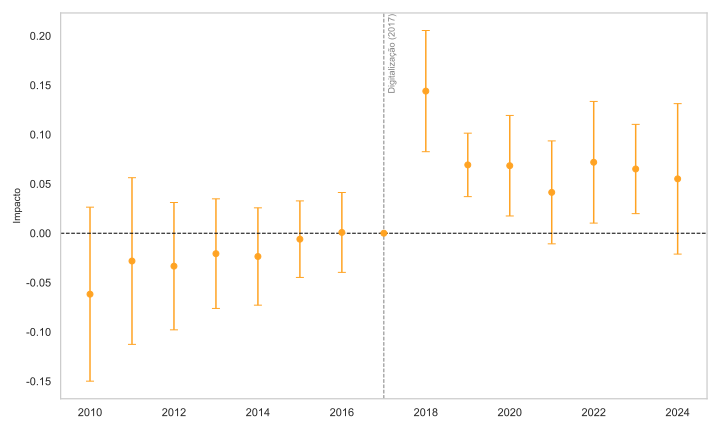
Source: Author’s calculations using INPI data (2025). Note. Estimates are obtained from an event-study model estimated by Poisson Pseudo-Maximum Likelihood (PPML), including municipality and year fixed effects. The coefficients represent the interaction between the log of distance and year indicator variables, capturing the dynamic impact of location relative to the base year of 2017. Standard errors are clustered by state (UF). Vertical bars indicate 95% confidence intervals. For full details on the econometric specification and parameters, see the Methodology Annex at the end of the study.
In the pre-digitalization period (2010 to 2016), the vertical bars cross the zero line, indicating that it is not possible to state that geographic distance influenced filing growth during that time. In other words, before the reform, municipalities closer to and farther from INPI’s headquarters followed similar growth trajectories. This pattern is consistent with the parallel trends assumption: in the absence of digitalization, the relationship between distance and filing growth shows no systematic change over time.
After the introduction of electronic filing in 2017, this pattern changes. Starting in 2018, most of the vertical bars remain entirely above the zero line, indicating that municipalities farther from INPI’s headquarters began to exhibit proportionally higher growth in the number of filings. To illustrate the magnitude of the effect, the 2018 estimate indicates that if a municipality neighboring Rio de Janeiro recorded 1% growth in filings that year, a municipality 10% farther away would have grown, on average, by about 2.4%. That is, 1.4 percentage points higher than the closer municipality. This difference is identified as the effect of digitalization on the cost component associated with geographic distance.
Discussion of Results
The results indicate that the digitalization of computer program registration in Brazil produced heterogeneous territorial effects, disproportionately benefiting locations farther from INPI’s headquarters. Before the introduction of the e-RPC, geographic distance to Rio de Janeiro was not associated with significant differences in filing growth over time. After digitalization, however, more distant municipalities began to show proportionally greater expansion in the number of registrations.
Digitalizing software registration can be understood as a reduction in transaction costs, shifting actors’ cost-benefit calculations and encouraging formalization (Djankov et al., 2002; Bruhn & McKenzie, 2014).
Before 2017, the physical registration procedure imposed costs, such as travel and the shipment of documentation, which tended to fall more heavily on applicants located far from INPI’s infrastructure. These distance-related costs increased not only out-of-pocket expenses, but also the risks and administrative uncertainty of the process. When the costs of accessing formal institutions are high, individuals and firms tend to operate partially or entirely outside the formal system, even when they hold assets that could be legally protected (North, 1990; Lanjouw & Schankerman, 2004). As a result, before digitalization, the expected benefits of protection often did not outweigh the costs associated with registration, discouraging formalization.
digitalization reduced geographic frictions in the registration process, lowering formalization costs most sharply precisely where physical barriers had been greatest. In the short run, the initial jump in growth in locations farther from INPI is consistent with the hypothesis that software that already existed, but had not been formalized due to access costs, was brought into the protection system after the reform.
However, the impact of the reform is not limited to this initial adjustment. In the long run, a permanent reduction in costs changes incentives to register new computer programs. Lower marginal costs make it viable to formalize projects whose benefits would not have outweighed the costs of the physical procedure. In this way, the electronic system helps keep relative filing growth in more distant regions above the levels observed in the pre-digitalization period.
Taken together, the results show that the implementation of the e-RPC functioned as a policy to reduce administrative barriers, with distributive effects across Brazilian territory. By changing the cost structure of the procedure, the reform reshaped incentives to formalize. In practice, this allowed states previously penalized by physical logistics to expand their participation in the formal protection system. The brazilian state of Maranhão, for example, saw registrations rise from 14 to 42 in the first year of the reform, while Paraná more than doubled its volume, increasing from 119 to 294 filings.
These findings reinforce that the digitalization of public services can be a tool for expanding access to formal institutions by reducing costs associated with distance. The case of software registration shows that even when a reform is implemented uniformly at the national level, it can produce heterogeneous effects that reflect pre-existing differences in the access costs faced by users.
Conclusion
This study analyzed the effects of digitalizing computer program registration in Brazil, focusing on the introduction of the Electronic Computer Program Registration system (e-RPC) as an institutional change that reduced frictions in accessing the copyright protection system. The empirical evidence indicates that, before digitalization, geographic distance to INPI’s headquarters was not associated with differences in the growth of filings over time. After the reform, however, more distant municipalities began to show proportionally greater growth in the number of registrations, revealing an uneven territorial effect of digitalization across the country.
Taken together, the findings reinforce the importance of considering heterogeneous impacts when designing and evaluating digital administrative reforms. The digitalization of software registration did not simply streamline procedures. It also reshaped the territorial dynamics of access to copyright in Brazil, with more pronounced effects precisely where administrative barriers had been higher. Even when implemented uniformly nationwide, digitalization policies can generate unequal outcomes, reflecting pre-existing differences in users’ access costs and expanding the use of formal public services in proportion to the geographic difficulties previously faced.
More broadly, the results highlight the role of digitalization in shaping the administrative infrastructure through which rights provided by law are effectively realized. In contexts marked by large territorial extent and regional inequality, as in Brazil, physical costs and bureaucratic hurdles can limit access to formal rights even when legal protection exists in principle. By mitigating these barriers, the digitalization of public services demonstrates its potential to broaden participation in formal institutions and to reshape access to rights, offering relevant lessons for improving public policies aimed at innovation and regional development.
Direction For Future Studies
Based on this study’s results and discussion, we outline below a few directions for future research that could deepen our understanding of how the digitalization of public services affects access to formalization.
One relevant area for future study is to investigate whether the digitalization of computer program registration increased the use of the formalization system in absolute terms, and not only in relative terms between locations closer to and farther from INPI headquarters. This study identifies heterogeneous effects associated with geographic distance, but it does not directly assess whether the introduction of e-RPC expanded the total volume of registrations or whether part of the observed effect reflects a spatial redistribution of system use. Future analyses could examine this question by using other forms of intellectual property that were not affected by digitalization, providing evidence on the overall impact of digitalization on access to formal copyright protection.
A second line of inquiry concerns more precise identification of the mechanisms underlying the distance-related effect. In this study, distance to Rio de Janeiro is used as a proxy for access costs, but many other factors may influence the decision to formalize. Future research could examine, for example, whether the presence of INPI Regional Units, the availability of postal services, the quality of transport infrastructure, or local administrative characteristics moderate the impact of digitalization.
Future work could also complement this approach with qualitative evidence, such as interviews with developers, companies, and law firms. This type of evidence would help clarify more precisely how digitalization shaped perceptions of the costs, risks, and benefits associated with formalization.
Finally, another research agenda could explore the relationship between the digitalization of software registration and the medium-and long-term dynamics of innovation. In principle, lowering protection costs may also change incentives to create and invest in software over time. Future studies could investigate whether digitalization, by expanding access to formal protection, is associated with changes in innovation indicators. This agenda would make it possible to assess whether the effects of digitalization extend beyond the formalization of rights, contributing to broader transformations in the software ecosystem.
References
BRUHN, Miriam. License to sell: the effect of business registration reform on entrepreneurial activity in Mexico. The Review of Economics and Statistics, v. 93, n. 1, p. 382–386, 2011.
DJANKOV, Simeon; LA PORTA, Rafael; LOPEZ-DE-SILANES, Florencio; SHLEIFER, Andrei. The regulation of entry. The Quarterly Journal of Economics, v. 117, n. 1, p. 1–37, 2002.
FRIEDMAN, David D.; LANDES, William M.; POSNER, Richard A. Some economics of trade secret law. The Journal of Economic Perspectives, v. 5, n. 1, p. 61–72, 1991.
INSTITUTO NACIONAL DA PROPRIEDADE INDUSTRIAL (INPI). Anuário estatístico de propriedade industrial 2024. Rio de Janeiro: INPI, 2025.
LANJOUW, Jean O.; SCHANKERMAN, Mark. Protecting intellectual property rights: are small firms handicapped? The Journal of Law and Economics, v. 47, n. 1, p. 45–74, 2004.
NORTH, Douglass C. Institutions. Journal of Economic Perspectives, v. 5, n. 1, p. 97–112, 1991.
[1] Average calculated as the ratio between the total number of filings and the number of municipalities with at least one registration in each year.
Reglab Methodology Annex
Title
The Cost of Distance: digitalization and Formalization of Software Registration in Brazil
Research Question
Did the digitalization of software registration have a heterogeneous effect on the formalization of copyright across municipalities in Brazil?
Methodology summary
Continuous-treatment Differences-in-Differences, using the digitalization of software registration in 2017 as an institutional shock and distance to Rio de Janeiro (INPI’s headquarters) as a proxy for access costs. Estimates are obtained from Poisson models with municipality and year fixed effects (2010–2024) to identify heterogeneous and dynamic effects on computer program filings over time.
Data collection
Data on computer program filings were collected from the administrative records of the National Institute of Industrial Property (INPI), specifically the 2024 Statistical Yearbook of Industrial Property – Computer Programs. The dataset covers all computer program filings in Brazil by municipality between 2000 and 2024, identifying the number of filings by municipality of origin and year of submission. Monthly information on the filing channel was also collected from INPI’s Preliminary Statistics.
In parallel, geographic data on Brazilian municipalities were collected from the Brazilian Institute of Geography and Statistics (IBGE), including the territorial shapefiles used to calculate representative coordinates for each municipality. These data were integrated to build the municipality-level dataset used in the empirical analysis.
State-level totals were obtained by aggregating records at the municipality–year level and may differ from the official INPI statistics reported in the Yearbook, which rely on different administrative criteria.
Data analysis
The empirical design uses a Differences-in-Differences model with a continuous treatment. The counterfactual logic relies on the assumption that, in the absence of digitalization, the relationship between geographic distance to INPI headquarters and the growth of software filings would have remained stable over time. In other words, it assumes parallel trends. Municipalities closer to headquarters therefore serve as the counterfactual reference for the trajectory of more distant municipalities, with treatment intensity defined by geographic distance.
The analysis uses data from the 2024 Statistical Yearbook of Industrial Property – Computer Programs published by the National Institute of Industrial Property (INPI), covering the universe of computer program filings in Brazil by municipality between 2010 and 2024. The unit of analysis is the municipality-year. The sample includes all municipalities that recorded at least one software filing during the period, allowing the study to leverage both time variation and spatial heterogeneity in use of the registration system.
The dependent variable is the annual number of computer program filings per municipality. This is a non-negative count variable with a high frequency of zeros. This feature of the data motivates the use of the Poisson Pseudo-Maximum Likelihood (PPML) estimator, which is well suited to count outcomes with an excess of zeros and is consistent under heteroskedasticity.
The key independent variable is the geographic distance between each municipality and the city of Rio de Janeiro, where INPI is headquartered. Municipality location data come from the Brazilian Institute of Geography and Statistics (IBGE). For each municipality, a representative point was calculated from the official territorial shapefiles using Python’s GeoPandas library. Distance is measured in kilometers and transformed using the natural logarithm to capture proportional variation in access costs associated with geographic location. This metric is used as a proxy for the magnitude of the transaction-cost reduction induced by digitalization, under the assumption that more distant municipalities faced higher costs under the pre-reform regime.
The digitalization of software registration took effect in September 2017. For identification purposes, 2017 is treated as the baseline year in the dynamic analysis. Estimates are interpreted as relative changes with respect to that year, which allows the evolution of effects before and after implementation of the e-RPC to be assessed. Using annual data avoids contamination by short-run effects associated with the system’s operational transition during 2017.
The empirical analysis is conducted in a panel framework with municipality fixed effects and year fixed effects. Municipality fixed effects absorb all time-invariant heterogeneity, such as structural economic characteristics, local administrative capacity, and innovation culture. Year fixed effects control for shocks common to all municipalities, including macroeconomic changes, sectoral cycles, and national events that affect the propensity to register software.
A Poisson event-study model is estimated by interacting the log of distance with year dummies, allowing the temporal dynamics of the digitalization effect to be identified relative to the 2017 baseline. This specification provides visual and statistical evidence on the presence of pre-trends and on when post-reform effects emerge.
Standard errors are clustered at the state (UF) level to account for within-state spatial correlation in the residuals.
Bias Reduction Procedures
Established theoretical and methodological references: the empirical strategy adopted in this study is grounded in well-established assumptions in the policy evaluation literature, particularly the parallel trends assumption associated with Differences-in-Differences models. The validity of this assumption was assessed by examining pre-reform trends, in line with standard practice in the literature.
Identification strategy and exogeneity: the research design leverages a nationwide, abrupt institutional change combined with predetermined geographic variation. This configuration helps mitigate concerns about endogeneity in treatment assignment, strengthening the causal interpretation of the results.
Peer review: the methodological approach and results were subject to successive rounds of academic discussion and feedback throughout the development of the study. This process enabled refinement of the analytical choices and incorporation of specialized critique, contributing to the robustness of the findings.
Other Methodological Limitations
Parallel trends assumption: The empirical strategy relies on the assumption that, in the absence of the reform, the relationship between geographic distance and the growth of filings would have remained stable over time. Although pre-reform evidence supports this assumption, it cannot be directly verified for the post-intervention period.
Lack of a structural model: The study shows how the impact of digitalization varies with geographic distance, but it precludes the direct isolation of the specific mechanisms—such as lower administrative costs—through which this effect operates.
Measurement error: The identification of the municipality of origin is based on the characteristics of the first-name applicant, which may introduce measurement error in a limited number of cases with multiple rights holders. This potential error is limited to situations in which the first-name applicant is located in a different municipality—farther from INPI’s headquarters—than the other rights holders, and it does not affect most of the registrations analyzed.
Software use
The software used in the development of this study included:
MS Office for editing text, tables, and charts.
ChatGPT for grammar review (spelling, grammar, and synonym search), language refinement, adjustments to pre-written passages, and support in developing the Python code.
Python for data processing, model estimation, and chart generation.
Ethical Guidelines
Research partnership and funding: This research was funded by Google Brasil Internet Ltda. To ensure the integrity of this work, the authors designed, conducted, and analyzed the study independently, without any contribution or interference from the company, which also did not influence the interpretation of the results. The authors retain full professional independence and responsibility for the content and conclusions of this work.
Privacy and confidentiality: The data used are in the public domain and were obtained from accessible sources, without violating the privacy or confidentiality of any individual or institution.
Responsible use of public data: Although the data analyzed are publicly available, they were used responsibly and ethically, solely for academic research purposes.
Methodological transparency: The research methodology is described in detail to ensure transparency and replicability, contributing to scientific integrity and enabling independent validation of the results.
Non-discrimination and respect for diversity: The research was conducted in a manner that respects diversity and avoids any form of discrimination.